
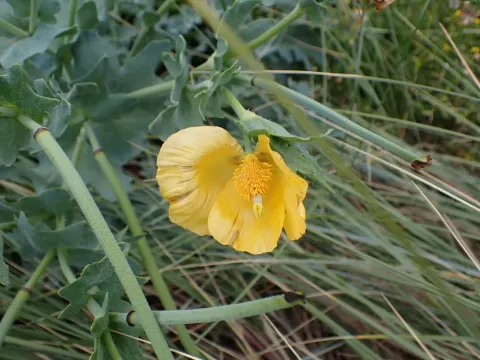
Glaucium
Glaucium
Glaucium seeds have high biological activity but require specific preparation for uniform germination. The optimal sowing time is late autumn (October) or early spring, as soon as the soil is workable.
What the section contains

Glaucium
For spring sowing, seeds are often stratified at low positive temperatures for one month. This process overcomes embryo dormancy and ensures stable seedling emergence.
The sowing depth should not exceed 0.5–1 cm, as the seeds are small and require minimal soil cover to germinate under sufficient light exposure.
Planting is conducted in rows with spacings of 45–60 cm, which provides enough space for the development of a strong leaf rosette during the first year of the plant's life.
After emergence, thinning is mandatory to maintain a distance of 20–25 cm between plants in the row, preventing overcrowding and ensuring optimal airflow.
Glaucium belongs to the Papaveraceae family and is a light-loving plant that does not tolerate shading. To ensure the proper accumulation of alkaloids, the crop requires open, well-lit areas.
The crop is relatively undemanding regarding soil types but prefers light sandy or sandy loam soils. A crucial requirement is excellent drainage, as waterlogging is detrimental to its root system.
The plant is well-adapted to arid conditions, allowing it to be grown in regions with limited rainfall. It exhibits high salt tolerance and can even thrive on saline substrates.
The temperature regime should be moderately warm during the growing season. The plant can withstand short-term temperature drops but is sensitive to severe frost without snow cover in high humidity.
The application of mineral fertilizers, especially nitrogen-phosphorus blends, promotes vegetative growth, which is critical for maximizing the yield of medicinal raw material.
The yield of Glaucium depends directly on the age of the plantation and the agronomic practices applied. In industrial conditions, the yield of the aerial part (herb) ranges from 1.5 to 2.5 tons of dry matter per hectare.
The primary active compound is the alkaloid glaucine, with concentrations in dry leaves reaching up to 2–4 percent. Yield is maximized by harvesting twice per season.
In the first year, plants form only a basal rosette of leaves; therefore, commercial harvesting typically begins from the second year of vegetation when active flowering occurs.
The plantation's efficiency remains high for 3–4 years, after which productivity declines, necessitating the renewal of the crop on fresh soil.
Seed collection for reproduction is also a significant yield indicator, although Glaucium is prone to seed shedding once its long pod-like fruits fully mature.
The main threat to the crop is root rot, caused by moisture mismanagement. Excessive irrigation or heavy, poorly draining soils trigger the development of fungal pathogens.
Pests, such as aphids and various caterpillar species, may damage young leaves and flower stalks. Timely monitoring of the plantation allows for the containment of outbreaks at early stages.
Powdery mildew occurs during periods of high humidity and poor ventilation between rows, which necessitates maintaining optimal plant density.
Weeds pose a significant risk during the seed germination phase. Since seedlings grow slowly, regular inter-row cultivation is essential for the crop's survival.
The use of herbicides on medicinal Glaucium crops is limited, so mechanical weed control and mulching are the preferred methods for maintenance.
Harvesting of medicinal raw material is performed during the mass flowering phase, when the concentration of glaucine in the plant tissues reaches its peak. This timing determines the pharmacological value.
The herb is cut at a height of 5–10 cm from the ground using specialized machinery. Depending on the climate, two to three cuts per season may be achieved.
The collected mass must be transported to the drying facility immediately. Delaying the process leads to self-heating of the material and the degradation of active biological compounds.
Drying is conducted in well-ventilated facilities or specialized dryers at temperatures not exceeding 50 degrees Celsius to prevent the destruction of sensitive alkaloids.
Stored raw material must be kept in dry, dark, and moisture-proof warehouses, maintaining strict hygiene to prevent pest infestations and quality deterioration.