
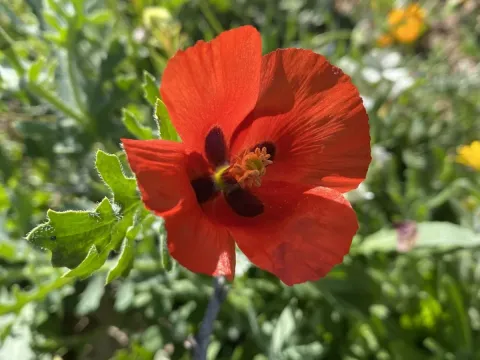
Glaucium corniculatum
Glaucium corniculatum
Glaucium corniculatum, commonly known as the red horned poppy, is an annual herb belonging to the Papaveraceae family. In agricultural practice, seeds are typically sown in early spring, as soon as the soil temperatures reach at least 5-8 degrees Celsius.
What the section contains
Glaucium corniculatum
The seeds of this crop are exceptionally small, necessitating a very shallow sowing depth of 1-2 centimeters. Achieving uniform planting is essential, usually done by drills set at a row spacing of 45 to 60 centimeters to facilitate inter-row weeding and maintenance.
Preparation of the seedbed is crucial for successful establishment. The soil should be finely tilled and leveled to prevent the seeds from being buried too deep, which would result in poor germination and patchy emergence across the field.
Sowing rates should be calculated based on the germination percentage of the specific seed lot. After sowing, light rolling of the soil surface can improve seed-to-soil contact, which is vital for moisture uptake during the initial germination phase.
In some production systems, late autumn sowing is practiced in mild climates. This allows the seeds to germinate early in the spring, utilizing the soil moisture from winter precipitation to establish a strong root system before the onset of heat.
This crop thrives in open, sunny locations, as it originates from Mediterranean-type climates. High levels of solar radiation are necessary for the development of the secondary metabolites, specifically alkaloids, for which the plant is primarily cultivated.
Soil requirements focus on excellent drainage and light texture. Sandy or gravelly loam soils are ideal, as the plant is highly susceptible to root rot in waterlogged conditions. Heavy clay soils that retain excess moisture should be avoided at all costs.
During the growing season, inter-row cultivation is required to keep the fields free of weeds. As the crop grows, it can compete moderately well, but early-stage weed control is essential for preventing yield losses due to nutrient and water competition.
Fertilization should be managed carefully. While moderate applications of phosphorus and potassium can enhance vigor, excessive nitrogen fertilization is often discouraged, as it may stimulate lush vegetative growth at the expense of alkaloid concentration.
The crop displays significant drought tolerance once established due to its deep taproot system. However, for maximum biomass production, supplemental irrigation during prolonged dry spells is recommended to keep the plant in a state of active growth.
Glaucium corniculatum is naturally resilient to many pests due to its complex chemical profile containing specific alkaloids. Despite this, the crop is not immune to agricultural threats, particularly when grown in monocultures or poor conditions.
Fungal diseases are the primary concern, especially in high-humidity or poorly ventilated environments. Root rot and damping-off can devastate a young stand if soil drainage is inadequate or if irrigation practices are too aggressive.
Pests like aphids may occasionally colonize the plants during warmer periods. Monitoring is essential; if populations exceed economic thresholds, soft insecticides or biological control agents can be employed to protect the crop without disrupting the harvest quality.
Weed management remains the most labor-intensive part of protecting this crop. Because there are limited registered herbicides for niche medicinal crops, mechanical weed control remains the standard and most reliable method for maintaining a healthy field.
Crop rotation is fundamental to managing soil-borne pathogens. Glaucium corniculatum should not follow other members of the Papaveraceae family in the rotation sequence to prevent the build-up of host-specific diseases in the soil structure.
The harvest strategy for Glaucium corniculatum is dictated by the chemical maturity of the plant. The goal is to collect the herb (aerial parts) exactly when the concentration of the desired active compounds is at its peak, typically during full flowering.
Mechanical harvesting is generally performed using forage harvesters or mowers, cutting the biomass at a height of approximately 5-10 centimeters from the ground. It is critical to harvest under dry conditions to avoid moisture-related quality degradation.
Post-harvest handling must be swift. The cut biomass should be transported immediately to drying facilities. Forced-air drying at temperatures between 40-45 degrees Celsius is standard to maintain the integrity of the heat-sensitive alkaloids.
Even drying is necessary to prevent spoilage. If the biomass is piled too thickly, fermentation and mold growth can occur within hours, rendering the entire harvest unsuitable for the pharmaceutical market and drastically reducing its value.
Once dried, the product should be stored in cool, dark, and dry conditions. Proper storage prevents the degradation of chemical compounds and ensures the shelf-life of the dried raw material meets the standards required for downstream processing.