
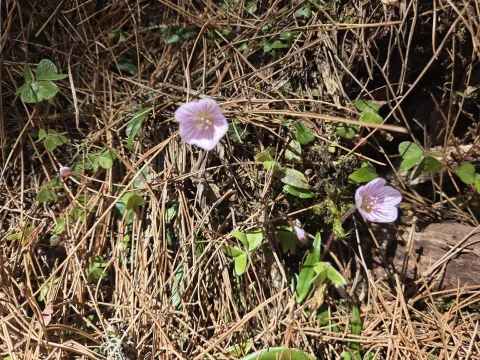
Griffith's woodsorrel
Oxalis griffithii
Griffith's woodsorrel (Oxalis griffithii) is a perennial herbaceous plant belonging to the Oxalidaceae family. Native to the mountainous regions of East Asia, it typically inhabits the floor of temperate broad-leaved forests, where it thrives in cool and sheltered environments.
What the section contains
Griffith's woodsorrel
The plant is characterized by its trifoliate, clover-like leaves and delicate white or pale pink flowers. It spreads via creeping rhizomes, forming low-growing, dense mats that act as an excellent natural groundcover in shaded landscape designs.
This species requires high levels of shade to partial shade, mimicking its natural habitat under the canopy of trees. Exposure to direct sunlight often leads to foliage desiccation and reduces the overall vigor of the plant during the active growing season.
Soil requirements are quite specific: it thrives in humus-rich, moist, and well-drained soil with a slightly acidic profile. Maintaining consistent soil moisture is crucial, especially during the spring bloom, while avoiding the waterlogging that often occurs in compacted soils.
In cultivation, Oxalis griffithii is valued primarily for its aesthetic appeal in woodland gardens and shaded border areas. It is an excellent choice for gardeners looking to introduce native-style forest flora into their outdoor spaces where soil quality is consistently managed.
The primary threats include fungal infections such as root rot and powdery mildew, which often flourish in conditions with high humidity and poor air circulation. Proper spacing between plants is recommended to mitigate these risks.
Slugs and snails are the most significant pests for this species, frequently causing visible damage to the soft leaves. Occasionally, spider mites may infest the plants during prolonged dry spells, necessitating irrigation to maintain sufficient humidity levels.