
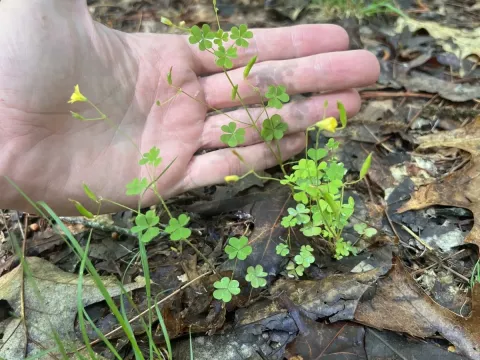
Florida woodsorrel
Oxalis florida
Florida woodsorrel (Oxalis florida) is a perennial herbaceous plant belonging to the Oxalidaceae family. This species is native to North America and is well-adapted to various habitats ranging from open fields to light woodland understories.
What the section contains
Florida woodsorrel
Cultivation requires well-drained, slightly acidic to neutral soils rich in organic matter. The plant thrives in environments that provide consistent moisture, but it is essential to avoid waterlogged conditions which can lead to root system decay.
Regarding light requirements, this species favors partial shade. Exposure to intense afternoon sun can cause leaf scorch, whereas deep shade might result in leggy growth and reduced flowering, making filtered light the optimal choice.
Temperature tolerance is moderate, and the plant performs best in temperate climates. During harsh winters, providing a layer of mulch is highly recommended to protect the root crown from severe frost damage.
Regular maintenance includes monitoring soil moisture and performing light weeding. Since the plant forms dense patches, it can effectively suppress smaller weeds once it becomes established in its environment.
The primary fungal threats to Florida woodsorrel include powdery mildew, which often appears when there is insufficient air circulation around the plants. Proper spacing is a key preventative measure.
Common pests include spider mites and aphids, which can infest the underside of leaves. Regular inspection of the foliage is necessary to detect these pests before they reach damaging population levels.
Root rot is a major risk factor when growing this plant in heavy, clay-based soils. Ensuring proper soil preparation with sand or perlite can significantly mitigate the risk of fungal pathogens in the root zone.
Slugs and snails may feed on the tender young foliage, particularly during rainy spring periods. Applying organic pest control measures can help protect the aesthetic appearance of the plant population.
Systemic viral infections, though less common, can cause stunted growth or distorted leaves. Any plants showing signs of severe viral infestation should be removed and destroyed to prevent spreading.