
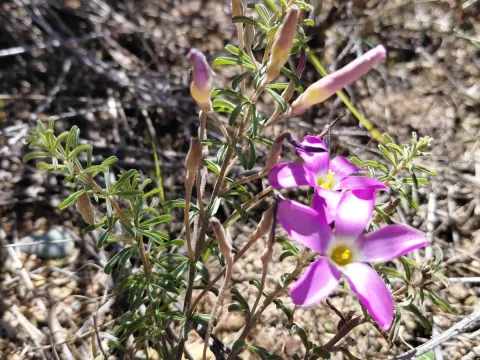
Hairy woodsorrel
Oxalis hirta
The planting of Hairy woodsorrel (Oxalis hirta) bulbs is typically scheduled for the autumn months, aligned with the onset of the plant's natural growth cycle.
What the section contains
Hairy woodsorrel
Bulbs should be buried at a depth of approximately 3 to 5 centimeters in well-aerated soil to ensure optimal conditions for root establishment.
Proper spacing between plants is essential to facilitate air circulation, which helps prevent the development of moisture-related diseases in the foliage.
It is recommended to use a lightweight, sandy-loam substrate during the planting process to provide the necessary drainage that the species requires.
For container-grown specimens, ensure the pot has multiple drainage holes to prevent the accumulation of excess water, which could lead to rot.
Hairy woodsorrel is a member of the Oxalidaceae family, natively occurring in the South African region with a Mediterranean-style climate.
The plant thrives in full sun exposure, which is necessary to maintain the vibrancy of its flowers and the density of its unique hairy stems.
Soil requirements dictate a neutral to slightly acidic pH, coupled with high organic matter content to support the vigorous growth of the plant.
Climate management is crucial; the plant is not winter-hardy in severe frost zones and requires protection or indoor cultivation in colder regions.
Regular monitoring of soil moisture is required, as the plant demands consistent irrigation during its growth phase followed by a dry dormancy period.
Root and bulb rot constitute the most severe threat to Hairy woodsorrel, primarily caused by over-irrigation or stagnant water in the root zone.
Fungal pathogens such as gray mold can affect the stems and leaves if the plants are crowded together or if humidity levels remain excessively high.
Pests such as spider mites and aphids are known to feed on the hairy stems, often necessitating the application of specific horticultural soaps or insecticides.
Integrated pest management strategies should be employed to mitigate damage while maintaining the safety of the plant and surrounding biodiversity.
Early detection of yellowish spots or deformed growth is vital, as it usually serves as the first indicator of a developing pest or disease issue.
Harvesting the bulbs should only occur after the foliage has naturally withered and turned yellow, signaling the plant's entry into dormancy.
Carefully extract the bulbs from the soil, ensuring that the skins remain intact, as any mechanical damage can serve as an entry point for pathogens.
Once harvested, the bulbs must be cleaned and allowed to cure in a dry, shaded, and well-ventilated location to prevent fungal contamination.
Store the dormant bulbs in a cool, dry environment, preferably within a paper bag or a box filled with dry peat to maintain moisture equilibrium.
Success in future planting depends heavily on these post-harvest handling practices, which ensure the viability and vigor of the bulb stock.