
Burnat's rattle
Rhinanthus burnatii
Description
Growing requirements
Burnat's rattle (Rhinanthus burnatii) is a member of the Orobanchaceae family. It is an annual hemiparasitic herb that thrives in diverse grassland ecosystems throughout Europe.
The plant functions by attaching its root system to the roots of neighboring grasses and herbs using haustoria. This mechanism allows it to extract essential nutrients and water, directly competing with the host plants.
Ecologically, the species prefers well-lit environments and soils with a balanced pH. It is notably sensitive to high nitrogen inputs, which can suppress its parasitic efficiency while promoting vigorous growth in rival crop species.
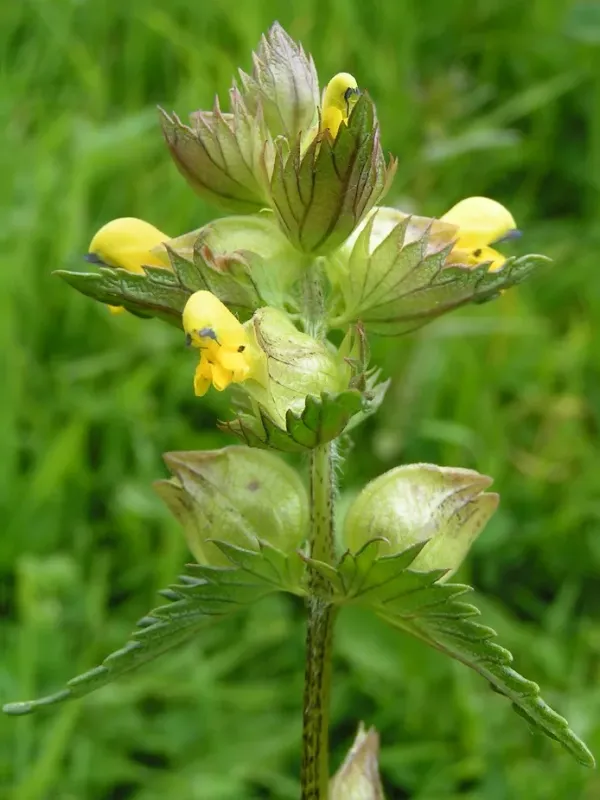
Botanically, it is recognized by its erect stems and inflated seed capsules. As the seeds mature, they become loose within the dry capsules, creating a rattling sound when moved by the wind or touch, which serves as a key identification feature.
In farming, it is often viewed as a problematic species for hay production. Extensive infestation leads to reduced biomass production of valuable fodder grasses, ultimately impacting the economic return of the meadow.
Main diseases and pests
The primary threat posed by Burnat's rattle is its ability to reduce the vitality of healthy pasture crops. By siphoning resources, it contributes to stunted growth in surrounding vegetation and diminished forage quality.
While natural fungal pathogens exist, they are generally insufficient to curb the spread of the plant. Farmers must therefore rely on consistent monitoring and mechanical prevention strategies to maintain crop density.
The most effective management technique is early mowing. By removing the plants before the seeds have a chance to set and disperse, producers can effectively deplete the soil's seed bank over several seasons.
Chemical control remains complex, as indiscriminate application could damage surrounding forage species. Targeted weed management and maintaining high-density healthy grass cover are preferred over synthetic interventions.
Livestock management practices, such as controlled grazing patterns, can also help mitigate the impact. Removing tender shoots early in the season weakens the plant's reproductive potential and limits its expansion.