
Cistanche phelypaea
Cistanche phelypaea
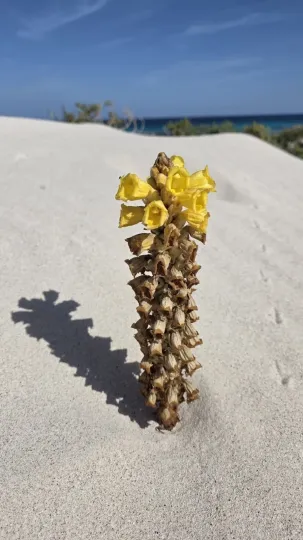
Description
Growing requirements
Cistanche phelypaea is a perennial parasitic plant species belonging to the Orobanchaceae family. As a holoparasite, it lacks chlorophyll, meaning it is entirely dependent on its host plant for essential nutrients, water, and carbohydrates to complete its life cycle.
The native distribution of this species spans the arid landscapes of Northern Africa, the Canary Islands, and the Iberian Peninsula. It thrives in extreme environments, often colonizing sandy or highly saline soils where other vegetation struggles to survive.
The plant attaches to the roots of its hosts, primarily salt-tolerant species such as those in the Amaranthaceae family, using specialized organs called haustoria. This physiological connection allows the parasite to extract resources directly from the host's vascular system.
Regarding environmental requirements, Cistanche phelypaea necessitates high temperatures and prolonged periods of sunlight. Its tolerance for saline soil conditions makes it a significant subject for research regarding the physiological adaptations of halophytic parasitic organisms.
Cultivation attempts require strict management of the host-parasite relationship. Agricultural success is inherently linked to the health and abundance of the host species, as the parasite's growth rate is directly proportional to the resource availability provided by the root system of the host.
Harvesting
The harvesting of Cistanche phelypaea is conducted primarily for its medicinal value, specifically for its content of phenylethanoid glycosides. The stems are typically collected during the flowering stage, ensuring that the harvested material possesses the highest possible concentration of bioactive compounds.
Sustainable harvesting techniques are essential to preserve the host plants. By carefully removing the aerial shoots without damaging the subsurface haustorial connection or the host root system, practitioners can ensure the plant remains productive for future seasons.
Post-harvest handling involves cleaning the stems of soil and debris, followed by rapid drying. Drying is a critical phase to stabilize the chemical composition and prevent degradation, ensuring the efficacy of the botanical extracts used in traditional and modern medicine.
Processing steps may include milling or distillation, depending on the end-use of the biomass. Maintaining strict quality control during the drying process is paramount to meeting pharmacological standards for purity and potency of the final product.
Due to the difficulty of large-scale commercial cultivation, wild-harvesting remains the predominant method for obtaining raw material, making the conservation of its natural habitats a priority for sustained agricultural interest in this unique botanical species.