
Cistanche deserticola
Cistanche deserticola
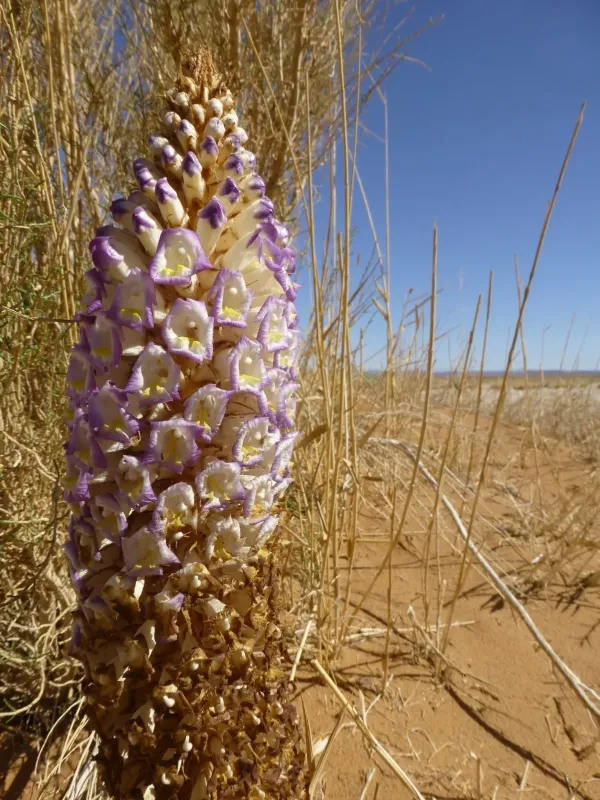
Description
Sowing dates
The cultivation of Cistanche deserticola involves a unique approach as it is an obligate root parasite. The seeds are not sown in traditional soil, but are introduced into the root zone of a host plant, primarily the saxaul tree (Haloxylon ammodendron).
The ideal time for inoculating the host plant with Cistanche seeds is during the autumn season, when the soil temperature decreases, aligning with the host plant's biological cycle.
Seeds are extremely small and can remain dormant in dry soil for several years until they detect root exudates from the host, which trigger germination.
In large-scale farming, seeds are placed in trenches or pits dug near the roots of the saxaul trees to ensure high chances of attachment and successful parasitism.
The depth of sowing typically ranges from 30 to 50 centimeters, ensuring the seeds are placed exactly where the saxaul's active lateral roots are located in the desert sand.
Growing requirements
Cistanche deserticola belongs to the Orobanchaceae family and is perfectly adapted to the harsh conditions of desert environments found in Central Asia.
The crop requires light, well-aerated sandy or loamy-sand soils. Excessive soil moisture is dangerous and often fatal, as it promotes rot at the attachment point between the host and the parasite.
Temperature fluctuations are extreme, but the plant thrives under high levels of solar radiation and dry conditions throughout its growth cycle.
The presence of healthy, mature host trees is the most critical requirement. Without the saxaul tree, the parasite cannot obtain the necessary nutrients to form its fleshy stems.
Irrigation is kept to a minimum in commercial plantations, utilized only during the initial inoculation phase to help the seeds attach to the host roots effectively.
Yield
Yield depends heavily on the density of the saxaul host population and the success rate of the seed infection. The cultivation cycle usually lasts between three to five years before the first harvest.
Productivity per hectare can reach several tons of raw succulent stems under optimal conditions, which are then processed and dried for medical use.
The fleshy stems contain high concentrations of bioactive compounds, such as phenylethanoid glycosides, which are in high demand within the international pharmaceutical market.
Agronomists monitor the health of the host trees, as a strong host is essential to support the development of multiple parasite stalks over many years.
Consistent yield is achievable in well-managed plantations where the host root system is protected from mechanical damage during the harvesting process.
Main diseases and pests
High soil humidity is the primary threat, as it fosters the development of pathogenic fungi that can infect the roots and lead to the death of the parasitic system.
Pests, such as various desert beetles and larvae, can damage the succulent stalks once they emerge from the sand, leading to a loss in commercial quality.
Erosion caused by strong desert winds can expose the host roots, causing young Cistanche shoots to dry out before they can establish a successful connection.
Diseases affecting the saxaul host, particularly root rot, indirectly reduce the yield of the parasite by limiting the flow of nutrients.
- Continuous soil moisture monitoring.
- Protection of the sand surface to prevent root exposure.
- Use of biological pest control methods suitable for arid regions.
Harvesting
Harvesting takes place in the spring during the flowering period, when the concentration of medicinal compounds in the stems is at its absolute peak.
The stems are carefully excavated by hand to avoid harming the main roots of the host tree, ensuring that the host remains productive for future harvest seasons.
Freshly harvested stems are cleaned of sand immediately and sorted by size, then sliced into pieces to facilitate even and efficient drying under the sun.
Proper drying is essential for preserving the quality and potency of the herb, requiring the product to reach a hard, brittle state without spoilage.
Dried product is stored in cool, dry, and well-ventilated areas, as the stems are highly hygroscopic and can easily absorb moisture if not properly sealed.