
Cistanche tinctoria
Cistanche tinctoria
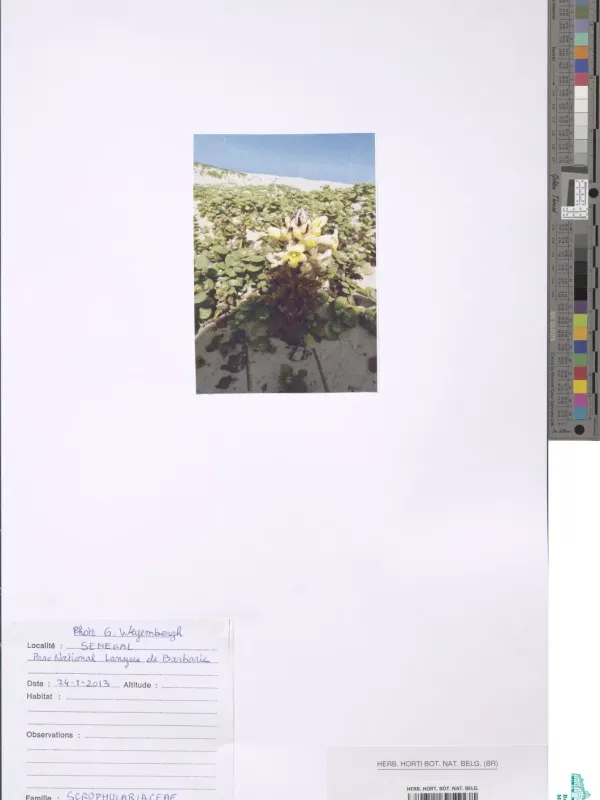
Description
Sowing dates
Cistanche tinctoria is a member of the Orobanchaceae family and functions as an obligate root parasite. Unlike traditional crops, the "sowing" process involves inoculating the root system of a host plant, typically species of the genus Haloxylon (saxaul) or Tamarix, with the seeds of the parasite.
The seeds of Cistanche are minute and exhibit high longevity in soil. In professional farming, the inoculation occurs during the planting or maintenance of host shrubs by placing seeds in the rhizosphere, ensuring direct contact with the host roots is established early.
Timing is crucial; the inoculation is ideally performed during the host's spring growth phase. This period ensures the host roots are actively secreting the chemical cues necessary to trigger the germination of Cistanche seeds and the development of haustoria.
The depth of seed placement must precisely correspond to the depth of the host's feeder roots. Proper technical implementation at this stage determines the success rate of the infestation and the subsequent development of the subterranean stem.
Vegetative propagation is possible, but seed-based inoculation remains the standard approach for establishing large-scale plantations in arid regions where the crop serves both ecological and commercial purposes.
##requirements##This crop is highly adapted to extreme arid conditions, thriving in environments characterized by massive temperature fluctuations and high solar radiation. It is a true xerophyte, capable of enduring severe drought and saline soil conditions.
Soil requirements prioritize well-drained sandy or sandy-loam substrates. The plant cannot tolerate waterlogging, as excessive moisture leads to the rapid decay of its succulent, water-rich stems, which are highly sensitive to fungal infections under humid conditions.
Thermal requirements focus on soil temperature rather than air temperature, as the main body of the plant develops underground. Warm, porous soils stimulate the rapid growth of the fleshy stems and the accumulation of bioactive glycosides.
Light exposure is only critical during the flowering phase, when the generative shoots emerge above the surface. Open, unshaded desert areas provide the optimal environment for the transition from vegetative to reproductive growth stages.
Once established, the crop requires minimal water intervention. Its physiological adaptation allows it to derive essential nutrients and water directly from the host plant, making it an excellent candidate for sustainable agriculture in water-scarce zones.
##yield##The yield of Cistanche is measured by the biomass of harvested stems. Commercial viability depends on the density of host plants per hectare and the long-term health of the host-parasite association within the plantation.
Sustainable yields can be maintained for 5 to 7 years. After this period, the host plant may become exhausted, requiring replanting or a rotation cycle to maintain the high quality of the medicinal harvest.
Yield quality is highly sensitive to environmental factors and the timing of the harvest. Scientific monitoring of the active chemical constituents, such as echinacoside and acteoside, is essential to ensure the harvest meets industrial pharmaceutical standards.
Beyond commercial raw material, the cultivation of Cistanche contributes to land reclamation. The host plants used in cultivation help stabilize shifting sands and prevent wind erosion, adding significant ecological value to the agricultural project.
Proper management of the plantation scale ensures consistent output, catering to the growing market demand for traditional medicinal raw materials without relying solely on dwindling wild populations.
##threats##Primary threats include specialized insect pests, such as certain weevils and desert moth larvae, that bore into the succulent tissues of the stem. These infestations significantly reduce the commercial value and overall vigor of the crop.
Fungal pathogens pose a risk, particularly during abnormal weather cycles with increased humidity. These conditions can trigger stem rot, necessitating proper site drainage and spacing to improve air circulation within the host plant community.
Overharvesting from wild populations is a major threat to the species' conservation. Establishing managed plantations serves as a protective measure, mitigating the pressure on natural ecosystems while providing a reliable supply chain.
Weed competition is generally low due to the specialized parasitic nature of Cistanche. However, preventing excessive weed growth near the host plant's base is necessary to ensure easy access for monitoring and harvest operations.
Proactive management of the host plant is the best form of protection. A healthy host plant is highly resilient, and by maintaining the vitality of the saxaul or tamarix shrubs, the risk of disease within the parasite population is significantly reduced.
##harvest##Harvesting takes place during the early flowering phase, as this is when the concentration of medicinally active compounds is at its peak. Delaying the harvest leads to the lignification of tissues, which lowers the quality of the end product.
The extraction process requires careful manual excavation to remove the stem without damaging the host’s root network. Preserving the host's integrity is vital for the continued survival and potential secondary yields of the plantation.
Post-harvest processing involves cleaning the stems of sand and debris, followed by rapid drying. Controlled solar or industrial drying is essential to prevent enzymatic degradation of the active glycosides within the fleshy stems.
Logistics for transport are demanding due to the high water content of fresh stems. Primary processing (slicing and partial drying) is often conducted in the field to prevent spoilage during transport from remote desert locations.
Proper storage is mandatory, requiring dry and dark conditions. If processed correctly, the dried Cistanche has a long shelf life, retaining its pharmacological efficacy for export and processing into final herbal formulations.