
Buchnera longifolia
Buchnera longifolia
Description
Growing requirements
Buchnera longifolia is a herbaceous plant belonging to the Orobanchaceae family. It is recognized as a root hemi-parasite, meaning that while it contains chlorophyll and performs photosynthesis, it relies on host plants for water and mineral salts, which it extracts via specialized structures called haustoria.
The origin of this species is traced to tropical and subtropical regions across Africa and Asia. It thrives in open, sunny habitats such as grasslands, savannas, and disturbed soil environments where it can easily find and infect the roots of neighboring grasses and legumes.
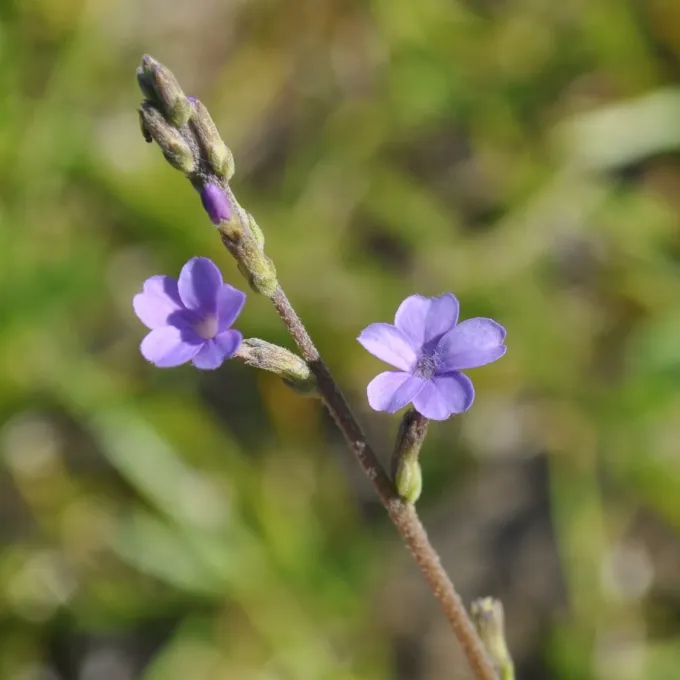
Botanically, the plant features an upright stem and simple, opposite leaves. Its most distinctive feature is the terminal inflorescence, which produces showy, often bluish or violet flowers. These flowers are essential for the plant's reproduction, resulting in numerous microscopic seeds that can remain dormant in the soil for several years.
Climatic requirements are centered around warmth and sufficient moisture during the germination period. The plant is highly adapted to tropical seasons, making it a persistent resident in regions where annual crops provide a consistent supply of nutrients for the parasite to exploit throughout the growing season.
The agricultural usage of this plant is non-existent, as it is strictly treated as a weed. Its presence in agricultural fields is highly undesirable because it functions as a biological drain on the resources of primary crops, leading to significant yield depression and requiring active management.
Main diseases and pests
The primary threats posed by Buchnera longifolia are the physical and nutritional depletion of host crops. Infected plants typically show signs of stunting, wilting, and poor biomass accumulation, which directly translates into reduced economic performance for the farm.
Control strategies emphasize the importance of prevention and sanitation. Farmers are advised to avoid moving contaminated soil, use clean seeds, and employ crop rotation techniques that utilize non-host crops to starve the parasite. Deep tillage and hand-pulling before the plant matures are recommended to limit the spread of seeds.