
Branched broomrape
Orobanche nana
Description
Sowing dates
Branched broomrape is an obligate root parasite that lacks chlorophyll and cannot perform photosynthesis. Its existence is entirely dependent on the host plant, to which it attaches its roots through specialized organs called haustoria to extract vital nutrients and water.
The life cycle begins when host plant root exudates, specifically strigolactones, trigger the germination of broomrape seeds in the soil. This process is synchronized with the development of the host's root system during the spring and summer months.
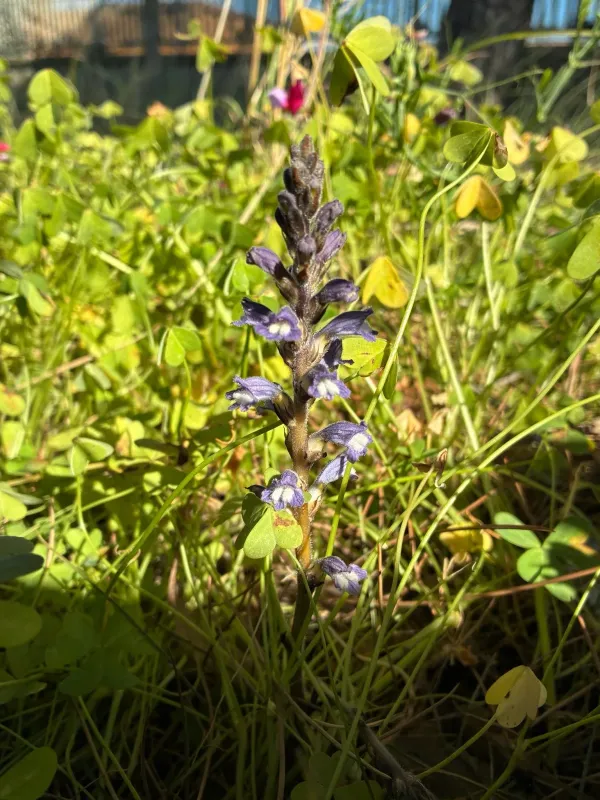
Since it is not a cultivated crop, its presence is determined by the farming season. Once the haustorium penetrates the host's root, the parasite develops rapidly, eventually producing purple or blue flowers above the ground, which then release thousands of microscopic seeds.
These seeds can remain viable in the soil for over a decade. Managing this weed is a major challenge for farmers because its development occurs largely underground, making early detection extremely difficult.
Effective management requires long-term crop rotation and the use of trap crops that stimulate seed germination without providing the necessary conditions for the parasite to complete its life cycle.
Growing requirements
Branched broomrape thrives in warm and temperate climates, with an ideal growth temperature ranging between +20°C and +25°C. It prefers well-drained, porous soils that allow for easy root contact with the host plant.
Soil moisture plays a critical role in the initial stages of the parasite's development. Moderate levels of moisture facilitate the chemical signaling between the host and the parasite, ensuring successful attachment.
The survival of the parasite depends on the host density in the field. High levels of soil infestation can lead to a complete failure of the agricultural crop, as the parasite competes for all available resources.
Preventative measures are essential, such as rigorous equipment sanitation. Seeds are easily transported via contaminated machinery, irrigation water, and even wind, facilitating the rapid spread across large agricultural areas.
Agronomic practices like deep plowing help bury seeds deeper than their germination capacity allows, while chemical treatments, such as soil fumigation, are used in high-value greenhouses to eliminate the seed bank.
Main diseases and pests
The main threat posed by branched broomrape is severe crop yield reduction. By siphoning water and minerals from the host, the parasite significantly stunts the growth of the crop, often leading to total collapse in heavily infested fields.
The most susceptible crops to O. ramosa include the following families:
- Solanaceae (tomatoes, tobacco, potatoes)
- Asteraceae (sunflowers)
- Cannabaceae (hemp)
- Cucurbitaceae (various melons)
Infected crops typically display signs of nutrient deficiency, including yellowing leaves, stunted height, and reduced fruit size. In many cases, the host plant dies before it can reach maturity, resulting in massive economic loss.
Traditional weeding is ineffective because the parasite is attached to the host's roots, and removing the visible flowering stems does not stop the underground damage caused by the haustorial connections.
Integrated pest management strategies include the use of herbicide-resistant crop varieties, biological control agents such as specific fungal species, and the application of pre-emergence herbicides to prevent attachment to host roots.