
Buchnera hispida
Buchnera hispida
Description
Growing requirements
Buchnera hispida is a herbaceous semi-parasitic plant belonging to the Orobanchaceae family. It is not a cultivated crop but a significant parasitic weed that poses a major threat to agricultural productivity in several tropical and subtropical regions, particularly across Africa and Asia.
This species originates from diverse tropical environments where it has evolved to parasitize the root systems of various monocotyledonous plants. Its life strategy involves attaching itself to host roots using haustoria to extract essential water and nutrients, which severely stresses the host plant.
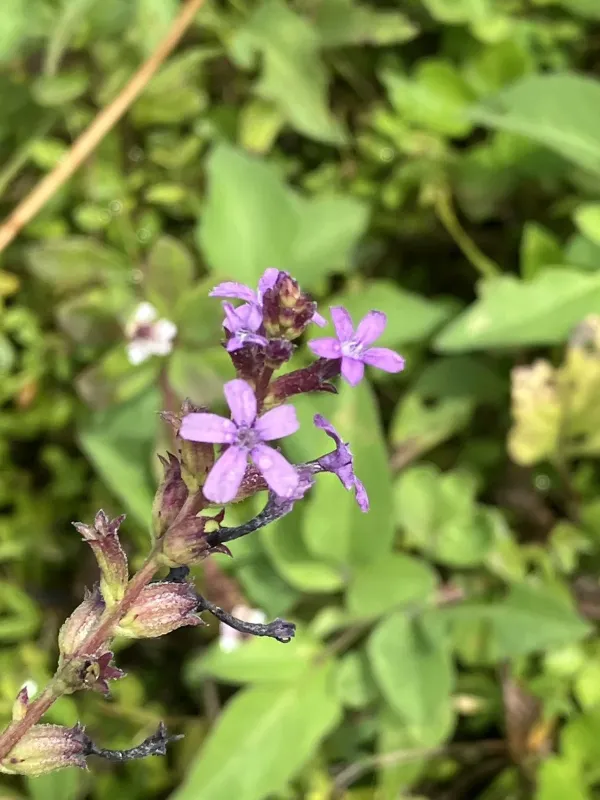
Botanically, the plant is characterized by a rough, hispid (bristly) stem and typically small flowers. It possesses chlorophyll and can perform limited photosynthesis, which makes it a hemiparasite, but it relies heavily on the host for minerals and water during its growth stages.
The climate requirements for Buchnera hispida are strictly aligned with warm, tropical conditions. It flourishes in fields with poor soil quality, where the host plants are already stressed, making them more susceptible to parasitic invasion.
Effective management requires deep knowledge of the plant's biology, specifically its reliance on host root exudates to trigger germination. In agricultural settings, the soil bank can contain vast amounts of dormant seeds waiting for the right host signal to emerge.
Main diseases and pests
The primary threat posed by Buchnera hispida is the significant reduction in grain yield of major staples such as sorghum, millet, and rice. The parasite drains the energy of the host, leading to stunted growth, nutrient deficiencies, and reduced quality of harvested grain.
A major challenge in control is the fact that the damage occurs underground long before the weed flowers. By the time the parasite is visible on the surface, the host plant has often already suffered irreversible physiological damage.
Crop rotation remains the gold standard for control. Integrating "trap crops" that stimulate the germination of Buchnera seeds without allowing the parasite to attach successfully is a common strategy employed by agronomists to deplete the soil seed bank.
- Early detection in fields.
- Strict seed hygiene to prevent contamination.
- Proper sanitation of farm machinery.
- Use of resistant crop varieties.
- Selective weeding of emerged plants.
While chemical control options exist, they must be applied with extreme caution to avoid phytotoxicity to the primary crop. Integrated Pest Management (IPM) practices, emphasizing cultural methods and prevention, currently offer the most sustainable approach to handling this persistent weed.