
Branched broomrape
Orobanche oxyloba
Description
Growing requirements
Branched broomrape (Orobanche oxyloba) is an obligate parasitic plant belonging to the Orobanchaceae family. Lacking chlorophyll, this species is incapable of photosynthesis and must attach its haustoria to the roots of a host plant to obtain water and nutrients.
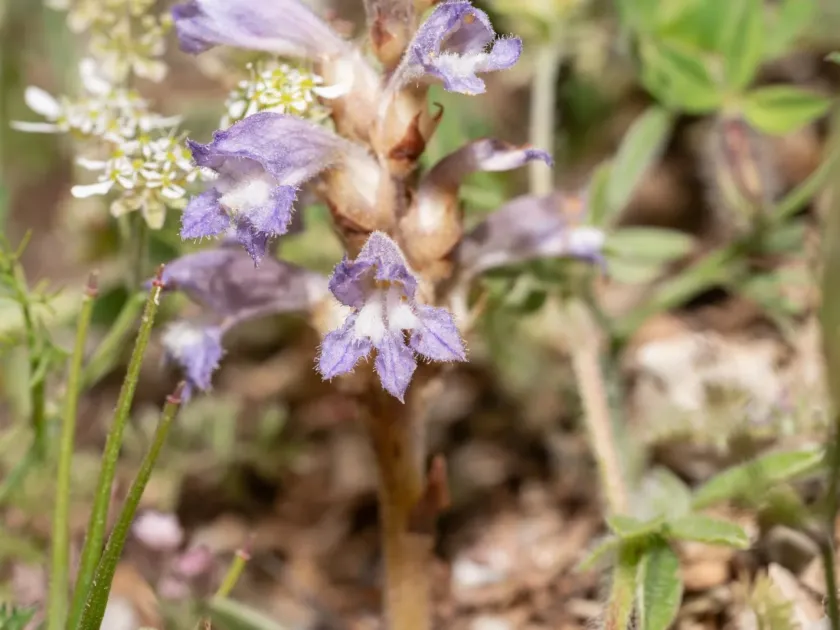
The plant originates from arid and semi-arid regions where it has evolved to survive in soil for extended periods. Its morphology consists of an erect, branched stem covered with small scale-like leaves, emerging from the ground only when flowering or producing seeds.
Seed germination is strictly triggered by specific chemical exudates, such as strigolactones, released by the roots of potential host plants. These seeds are remarkably resilient and can persist in the soil for over a decade, waiting for a suitable host.
Ideal conditions for the development of broomrape include warm, well-aerated soils with a neutral pH level. Temperature fluctuations significantly influence the timing of emergence, with optimal growth occurring at sustained temperatures between 20°C and 25°C.
Agronomic management relies heavily on crop rotation using "trap crops" that stimulate germination without allowing the parasite to attach. Deep tillage practices and the use of certified, clean seeds are essential components of an effective integrated management system.
Main diseases and pests
The primary threat posed by branched broomrape is its direct physiological impact on commercial crops, including tobacco, tomatoes, and sunflowers. By diverting resources from the host, the parasite significantly reduces plant vigor and overall agricultural yield.
Biological control efforts often focus on the phytomyza fly, which lays eggs in the broomrape seed capsules. The larvae consume the seeds, thereby reducing the parasite's reproductive success and limiting its spread within the field.
Chemical control strategies typically involve the application of selective herbicides in fields planted with resistant or tolerant crop varieties. This precision allows farmers to target the broomrape while maintaining the health of the primary economic crop.
Several pathogenic fungi can naturally infect broomrape tissue, leading to the necrosis of stems and floral structures. These biological interactions are subjects of ongoing research for the development of bio-herbicides and natural control methods.
Quarantine measures are essential to prevent the spread of tiny broomrape seeds, which are easily transported by contaminated machinery or irrigation water. Maintaining farm hygiene and cleaning equipment remain the most effective preventative strategies for agricultural land.