
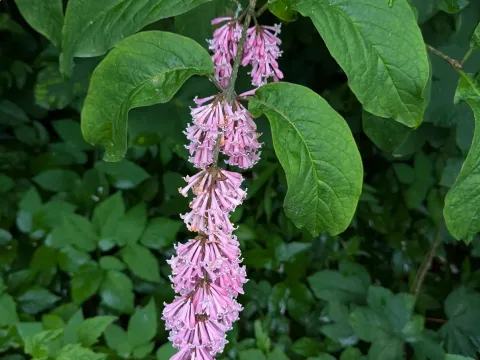
Nodding lilac
Syringa reflexa
The nodding lilac, scientifically known as Syringa reflexa, is a deciduous ornamental shrub belonging to the Oleaceae family. It is native to the mountain regions of China, where it evolved to thrive in varied temperate climates, making it a distinct and valuable addition to diverse garden landscapes.
What the section contains
Nodding lilac
Botanically, the plant is famous for its long, pendulous inflorescences that droop gracefully, differentiating it from common lilac species. The shrub typically grows to a height of 3 to 4 meters, developing a wide, spreading habit that requires adequate space to showcase its unique floral structure.
The plant requires well-drained, fertile soil with a neutral to slightly alkaline pH level for optimal growth. It is highly sensitive to waterlogged conditions, making it essential to prepare a proper drainage layer when planting in heavy or clay-based soils to ensure the health of the root system.
Sunlight is a critical factor for successful cultivation; therefore, selecting a site with full sun exposure is recommended for maximizing flower production. While the species is generally hardy, planting it in a location protected from harsh winds will help preserve the flower buds throughout the dormant winter months.
Basic maintenance involves annual pruning immediately after the flowering season to manage the shrub's shape and encourage healthy vegetative growth. Fertilization with a balanced slow-release fertilizer in early spring provides the necessary nutrients for vigorous development and vibrant blooms each season.
Common phytopathological threats to Syringa reflexa include powdery mildew, which thrives in conditions of high humidity and poor air circulation. To mitigate this, growers should ensure sufficient spacing between plants and avoid overhead watering to keep the foliage as dry as possible during warm spells.
Insect pests such as scale insects and leaf miners may occasionally infest the shrub. Routine monitoring is recommended; if an infestation is detected, targeted application of appropriate systemic insecticides or horticultural oils can effectively manage the population without causing damage to the plant or its surroundings.