


Reference · Crops
Olive
Olea
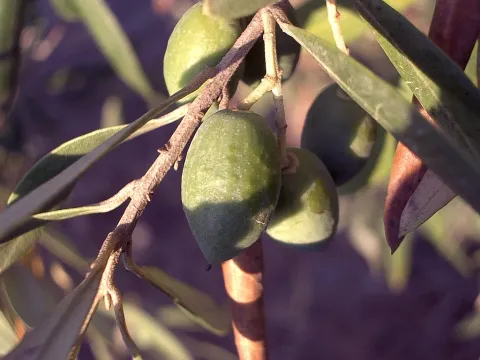
The European olive (Olea europaea) is an evergreen subtropical tree belonging to the Oleaceae family. The crop is highly demanding regarding heat and sunlight, preferring a Mediterranean climate with hot, dry summers and mild, wet winters.
2
items
What the section contains
Marketplace
Products in this section · 5


Olive
The tree exhibits high drought tolerance due to a well-developed root system capable of deep penetration into the soil. The optimal temperature for vegetation ranges from +20°C to +25°C, although the plant can withstand short-term frosts of up to -10°C during the dormancy period.
Olives have moderate soil requirements, preferring well-drained, light-textured soils. The crop thrives on calcareous substrates while being strictly intolerant to waterlogging and high groundwater levels.
Biologically, the olive is a long-lived species capable of fruiting for over 100 years. The tree is characterized by slow growth, leathery lanceolate leaves with silvery undersides, and small white flowers arranged in panicle inflorescences.
In agriculture, the olive is prized as a valuable oilseed and table fruit crop. Its primary commercial use involves processing fruits for cold-pressed extra virgin olive oil and brining for table consumption.
The productivity of a mature tree varies significantly based on age, cultivar, and management practices, averaging between 20 to 50 kg of fruit per season. Higher yields are achieved through regular pruning, which improves light penetration into the tree canopy.
One of the primary diseases affecting the crop is peacock spot (Cycloconium oleaginum), which infects leaves under high humidity conditions. The tree is also susceptible to bacterial knot, which manifests as galls or growths on the bark and branches.
The most devastating pest is the olive fruit fly (Bactrocera oleae), whose larvae feed on the fruit pulp, drastically reducing the commercial quality of the harvest. Without control measures, this pest can affect up to 80% of the entire yield.
Other common pests include the olive moth, scale insects, and mealybugs, which sap nutrients from young shoots. Pest control strategies combine biological methods and insecticide applications during critical development stages.
Disease prevention is centered on proper agronomic practices, timely sanitary pruning, and the removal of fallen leaves that serve as overwintering sites for pathogens. Proper canopy management ensures natural airflow, reducing the risk of fungal infections.
Harvesting begins when fruits reach a specific maturity stage: for oil production, fruits are harvested when they turn black, while for table use, they are picked at the green or yellowish-green stage. Collection is carried out either manually or using mechanical vibration equipment.