
Notelaea
Notelaea
Notelaea is a genus of evergreen shrubs and small trees belonging to the Oleaceae family. Native primarily to Australia, these plants are well-adapted to various ecological niches, often thriving in the understory of sclerophyll forests and scrublands.
What the section contains


Notelaea
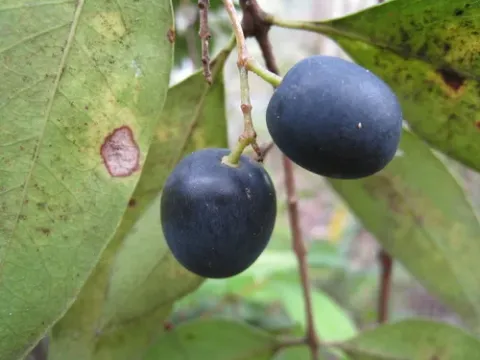
Botanically, the plant is characterized by its glossy, leathery leaves arranged in opposite pairs. The flowers are typically small and inconspicuous, followed by the development of drupe-like fruits. The structure of the plant makes it a resilient and aesthetically pleasing choice for specific garden environments.
Regarding climate requirements, Notelaea prefers stable, temperate conditions. While some species show moderate drought tolerance once established, they thrive best when provided with consistent moisture during their initial growth stages and active periods.
The soil profile for Notelaea should be well-draining and slightly acidic to neutral in pH. It is crucial to prevent waterlogging, as the root system is susceptible to decay if kept in stagnant, heavy clay soils for extended periods. Adding organic mulch can help maintain soil moisture and fertility.
In terms of practical use, Notelaea is highly valued in horticulture and landscape design. It is frequently used for hedging, screening, or as a structural element in native-themed gardens due to its dense, evergreen foliage and ability to tolerate regular pruning.
Common pests associated with Notelaea include scale insects and mealybugs, which can cluster on stems and leaves, causing leaf yellowing and reduced vigor. Integrated pest management, including systemic insecticides or manual removal, is recommended for effective control.
The primary diseases affecting Notelaea are fungal in nature, such as leaf spot and root rot. These are almost always linked to poor site drainage or overly dense planting that inhibits airflow. Maintaining proper plant spacing and ensuring good drainage are the best preventative measures.