
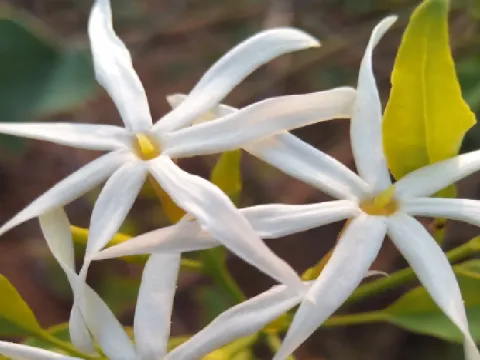
Narrow-leaved jasmine
Jasminum angustifolium
Narrow-leaved jasmine (Jasminum angustifolium) belongs to the Oleaceae family. It is a climbing, evergreen shrub originating from the tropical regions of India and Sri Lanka.
What the section contains
Narrow-leaved jasmine
The plant thrives in locations with bright, filtered sunlight. While it appreciates warmth, it is sensitive to intense midday heat, which can scorch the foliage if not properly shaded.
Soil requirements focus on high organic matter content and excellent drainage. The ideal substrate should remain moist but never waterlogged to ensure healthy root respiration.
Climate needs are strictly tropical. The ambient temperature should remain consistently warm, as this species lacks cold tolerance and suffers damage at temperatures below 15°C.
Humidity management is a critical aspect of its care. High ambient humidity helps maintain the plant's vigor and supports the development of its characteristic white, fragrant flowers.
The most common disease threats involve fungal pathogens that target the root system under conditions of poor soil aeration and excessive irrigation.
Spider mites are a major pest concern, particularly in indoor or greenhouse settings where the air is dry and warm, providing ideal conditions for their rapid reproduction.
Scale insects and mealybugs can also infest the stems and leaves, causing leaf yellowing and a general decline in the plant's overall health and aesthetic value.
Management strategies should include proactive monitoring of the undersides of leaves and the application of horticultural oils or soaps if an infestation is detected.
Maintaining proper hygiene by removing dead plant debris and ensuring adequate spacing between plants significantly reduces the risk of pest and disease outbreaks.