
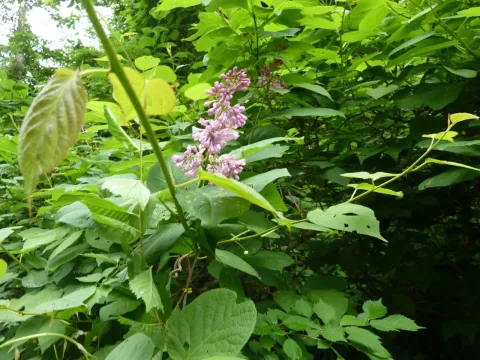
Wolf's Lilac
Syringa wolfii
Wolf's Lilac (Syringa wolfii) is a hardy deciduous shrub belonging to the Oleaceae family. Native to the Far East, including parts of China, Korea, and Russia, this species is highly valued in ornamental horticulture for its elegant growth habit and fragrant inflorescences.
What the section contains
Wolf's Lilac
The plant typically grows as a large shrub or small tree, reaching heights of up to 6 meters. It is characterized by its stiff, erect stems and large, oblong leaves that turn an attractive yellowish-brown hue in the late autumn, providing seasonal interest.
For optimal growth, Wolf's Lilac requires well-drained, fertile soil with a neutral to slightly acidic pH. It performs best in locations that receive full sun for the majority of the day, which is crucial for maximizing flower bud production and maintaining a compact shape.
The species is remarkably cold-hardy, capable of surviving harsh winters, and shows moderate tolerance to drought once established. However, during the initial planting years, consistent moisture is required to help the root system develop properly.
Maintenance includes light pruning after the flowering period to encourage branching and the removal of dead or crossing branches to improve air circulation within the canopy. Regular fertilization with balanced NPK fertilizers in early spring supports vigorous foliage growth.
Wolf's Lilac is generally resistant to pests and diseases, but it can be susceptible to powdery mildew during periods of high humidity and poor airflow. Preventive fungicide applications can help manage this condition if it appears.
Insect pests, such as lilac leafminers and various types of aphids, may occasionally affect the foliage. Using insecticidal soaps or systemic pesticides is effective in managing these infestations when spotted early in the season.
Bacterial blight can occur if the plant is stressed or wounded, leading to dark spots on leaves and stems. Maintaining proper garden hygiene and sanitizing pruning tools between uses is essential to prevent the spread of pathogens.
Proper spacing during planting is a primary cultural method to avoid disease pressure. Crowded planting environments increase the humidity around the foliage, creating an ideal microclimate for fungal spores to germinate and spread.
Monitoring the plant throughout the growing season ensures that any signs of distress are caught early. A healthy, well-nourished plant is naturally better equipped to withstand environmental stress and local pest pressures.