
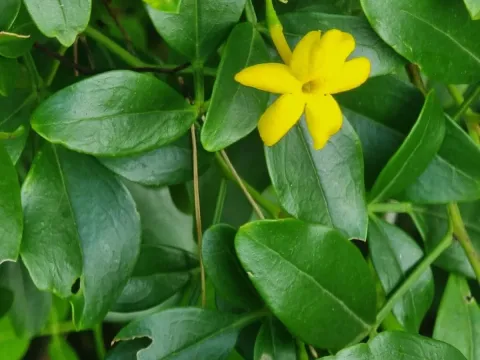
Yellow jasmine
Jasminum odoratissimum
Yellow jasmine (Jasminum odoratissimum) is an evergreen shrub belonging to the Oleaceae family. Native to the Canary Islands and Madeira, it is highly valued for its intense, sweet fragrance produced by its bright yellow flowers.
What the section contains
Yellow jasmine
This species thrives in sub-tropical climates and requires bright, indirect sunlight to maintain healthy growth. In cooler regions, it must be cultivated as a container plant and brought indoors during the winter months.
The ideal soil for this crop is a well-draining, nutrient-rich substrate with a slightly acidic to neutral pH. Proper aeration of the root zone is critical, as the plant is susceptible to root asphyxiation in waterlogged conditions.
Temperature management is vital: the plant grows best within a range of 18°C to 25°C. Exposure to frost should be strictly avoided, as it causes severe damage to the foliage and can kill younger specimens.
Watering should be consistent during the flowering phase. During the dormancy period in winter, watering intervals should be extended to allow the soil to dry partially, preventing moisture-related rot.
The most common pests affecting Jasminum odoratissimum include aphids and scale insects. These pests feed on the sap of tender shoots and can significantly weaken the overall health of the plant.
Spider mites represent a major threat in dry, indoor environments. They cause stippling on the leaves and can lead to defoliation if left untreated, requiring consistent moisture control and mite-specific treatments.
Root rot, caused by various soil-borne fungi, remains the primary disease risk. It is almost always a result of poor drainage or overwatering, making moisture management the most important preventive step.
Nutrient deficiencies, particularly iron chlorosis, can occur if the soil pH is too high or the irrigation water contains too many dissolved minerals, affecting the plant's ability to produce chlorophyll.
Integrated pest management strategies are recommended to maintain plant vitality. This includes frequent monitoring of the leaf undersides and ensuring good airflow to prevent fungal outbreaks.
For industrial applications, particularly in perfumery, flowers are harvested manually in the early morning. This timing is essential because the concentration of volatile oils is at its peak before the sun causes them to evaporate.
Speed is critical during the post-harvest stage. Flowers must be transported to processing facilities immediately to ensure that the delicate chemical profile of the essential oil remains intact.
The primary methods for extracting the fragrance include solvent extraction or the traditional enfleurage technique, resulting in a high-value jasmine absolute used in luxury scents.
Pruning is performed post-flowering to manage the shrub's architecture and encourage the development of new, flowering wood. Removing unproductive growth helps focus the plant's energy on blooming.
Proper maintenance of the canopy through selective pruning ensures that sunlight penetrates the center of the plant, which enhances flower production and improves the overall quality of the harvest.