
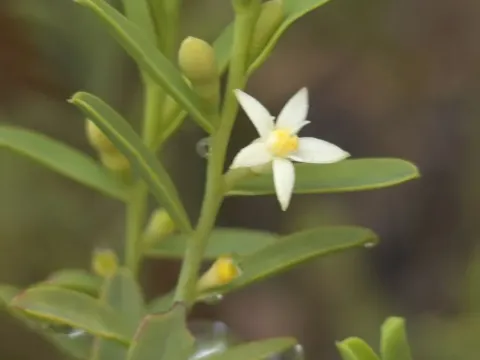
Olax
Olax
The genus Olax belongs to the Olacaceae family. These plants are tropical shrubs, small trees, or woody vines often characterized by their hemiparasitic habit, which allows them to obtain nutrients from the roots of other plants.
What the section contains


Olax
Native primarily to the tropical and subtropical regions of Africa, Asia, and Australia, Olax species typically inhabit savanna woodlands and forest edges. They thrive in environments where sunlight is available, despite the competition inherent in tropical ecosystems.
Climatic requirements for Olax are strictly tropical. They need consistent warm temperatures throughout the year and are highly sensitive to frost or prolonged cold snaps, which limits their cultivation to the tropical belt.
Soil requirements are relatively flexible due to the plant's hemiparasitic nature. While they prefer well-drained soils, their root systems are specialized to tap into the vascular systems of neighboring flora to supplement mineral intake.
Agrotechnical cultivation remains experimental rather than commercial. There are no standardized farming methods for this genus, as it is primarily managed within its natural habitat or preserved in scientific botanical collections.
The economic value of Olax is primarily rooted in traditional medicine. Various cultures use the roots, leaves, and bark to create topical applications for skin ailments or infusions for internal health support.
Harvesting is mainly practiced at a subsistence level. Wild harvesting remains the standard method, as domesticating the plant proves difficult due to its dependency on host species to reach optimal health and vigor.
Some species produce edible fruits that are consumed by local communities. However, these fruits are rarely found in international trade, serving mainly as a supplemental food source within their native ranges.
Current research focus is centered on phytochemistry. Scientists investigate the complex secondary metabolites present in the plant, hoping to isolate active compounds for potential medical and pharmaceutical applications.
Ultimately, Olax is a significant botanical subject for biodiversity research and ethnobotanical studies, rather than a crop intended for large-scale agricultural production or industrial farming.