
Ceylon olax
Olax zeylanica
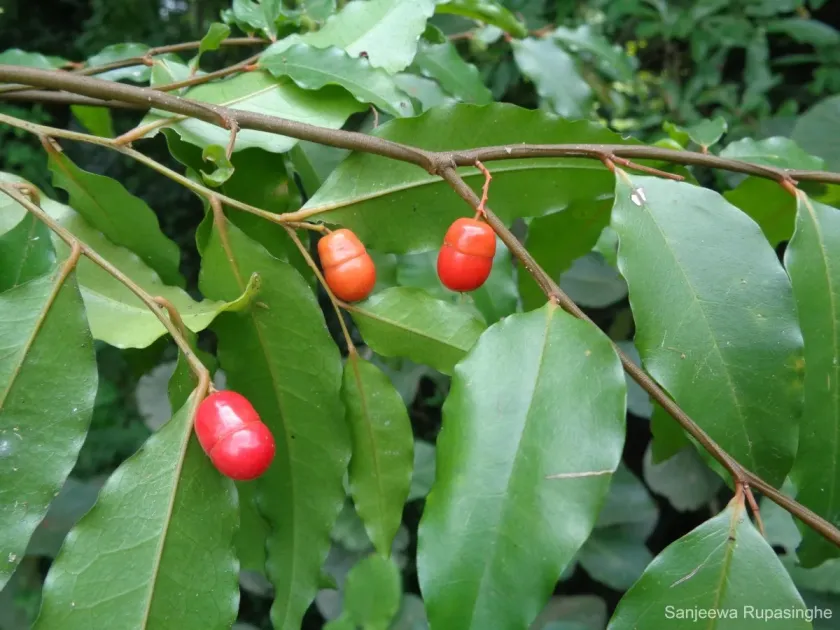
Description
Growing requirements
Ceylon olax (Latin: Olax zeylanica) is an evergreen woody plant belonging to the Olacaceae family. Native to the tropical regions of South Asia, particularly Sri Lanka, it has been used for centuries in local cuisine and traditional health practices.
The plant thrives in a tropical climate characterized by high humidity and consistent temperatures. It prefers deep, fertile, and well-drained soils. While it can adapt to various soil types, it performs best in environments that mimic the floor of a tropical forest with partial sunlight.
Botanically, it is identified as a shrub or small tree with alternating, simple leaves. The plant produces small, white-to-cream flowers followed by drupe-like fruits. Its growth habit is generally sprawling, which allows it to integrate well into agroforestry systems.
Cultivation practices involve maintaining adequate soil moisture and providing organic mulch to support the plant's nutritional needs. As a non-commercial crop, it is usually found in home gardens, where it is pruned regularly to encourage the growth of tender, edible young shoots.
The plant is highly valued for its edible leaves, which are rich in nutrients and commonly prepared in stir-fries or soups. Furthermore, its medicinal properties are widely acknowledged in indigenous systems of medicine, specifically in treating digestive ailments and skin conditions.
Harvesting
The harvesting of Ceylon olax is performed manually by picking the youngest, most tender shoots and leaves. Regular harvesting also acts as a form of pruning, which stimulates the plant to produce new vegetative growth, thereby increasing the overall yield of edible material throughout the season.