
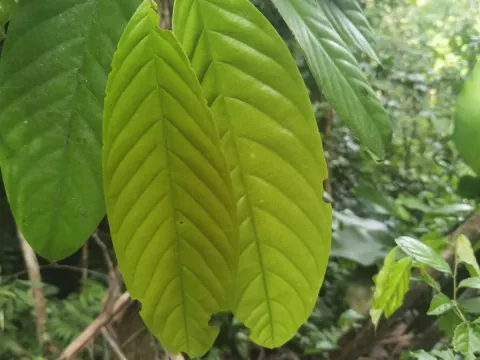
Minquartia
Minquartia
Minquartia (botanical name: Minquartia guianensis) is a prominent tree species belonging to the Olacaceae family. It is native to the tropical rainforests of Central and South America, frequently found in the Amazon basin.
What the section contains

Minquartia
The tree thrives in fertile, well-drained soils that are rich in organic matter. While it requires consistent moisture, it does not tolerate waterlogged conditions, making soil aeration a critical factor for healthy growth.
Climatic requirements involve stable tropical temperatures, usually ranging from 22°C to 28°C, and a high annual rainfall to sustain its evergreen canopy.
Minquartia exhibits shade tolerance during its sapling stage, allowing it to regenerate effectively under the dense cover of mature forest tiers.
From an agronomic perspective, the species is considered a slow-growing hardwood, which makes intensive plantation management challenging and economically long-term.
The primary economic value of Minquartia lies in its exceptionally dense and durable timber, commercially referred to as «manwood» or «acapu».
The wood is highly sought after for its natural resistance to decay, termites, and wood-boring insects, making it superior for outdoor structures.
Common applications include heavy construction, railway sleepers, fence posts, and marine piling where contact with soil or water is inevitable.
Due to its hardness and stability, the timber is also used in high-end carpentry, although its density makes it difficult to work with standard hand tools.
Sustainable harvesting practices are essential, as the species relies on stable forest ecosystems to maintain its natural regeneration rates.
Minquartia is remarkably resistant to typical agricultural pests and pathogens due to the chemical composition of its dense heartwood.
The most significant threat to the species is deforestation and the conversion of rainforest habitats into land for agricultural cultivation or livestock.
In forest management areas, physical trauma to the bark during extraction can increase susceptibility to secondary fungal infections.
No large-scale chemical pesticide applications are required for this species, as its native ecosystem provides the necessary ecological balance.
Conservation efforts are currently focused on tracking population density and preventing illegal logging to ensure the long-term viability of Minquartia in the wild.