
Ongokea
Ongokea
Ongokea (Ongokea gore) belongs to the Olacaceae family and is a prominent tree native to the tropical forests of West and Central Africa. It typically thrives in the upper canopy, reaching heights of up to 30 meters in its natural habitat.
What the section contains
Ongokea
The tree requires a consistently humid tropical climate with stable, high temperatures throughout the year. It has no tolerance for frost or extended periods of drought, which makes its natural distribution strictly confined to equatorial regions with abundant precipitation.
Optimal soil conditions include deep, well-draining, and nutrient-rich soils. Ongokea demonstrates the best growth rates in alluvial areas where organic matter accumulation is high and the soil remains moist enough to support its extensive root system.
Agrotechnical management of Ongokea is currently characterized by the harvesting of wild specimens. Developing plantation-style agriculture for this species remains challenging due to slow growth rates and the complex symbiotic relationship with soil fungi necessary for nutrient absorption.
The economic value of Ongokea is multifaceted. The seeds are primarily harvested for their high-quality oil, which contains specific fatty acids used in both traditional medicine and high-end industrial applications, while the dense wood is highly regarded for furniture making.
The yield of Ongokea is naturally cyclical and highly dependent on environmental variables such as rainfall patterns and pollination success. Mature trees provide substantial harvests, although individual tree output can fluctuate significantly from one year to the next.
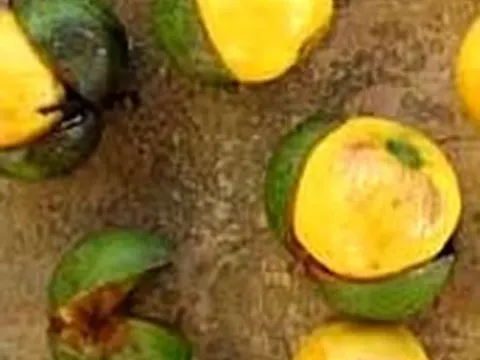
The primary yield component is the oil-rich seed. These seeds are harvested from mature drupes, which are collected when they fall to the forest floor or are carefully picked by local populations engaged in sustainable forest management.
Average productivity depends heavily on the tree's access to light. Specimens growing in less crowded areas with more sunlight exposure tend to produce a higher volume of fruit compared to those suppressed by the dense forest canopy.
Post-harvest processing involves the removal of the pericarp and subsequent extraction of the oil. Because this is often performed manually in local communities, the efficiency of obtaining high-purity oil is a critical factor in the value chain.
Future agricultural potential rests on identifying high-yielding phenotypes and improving propagation techniques to establish more efficient, semi-cultivated stands that could eventually reduce reliance on purely wild-sourced raw materials.
Fungal diseases are a major threat to Ongokea, especially during the wet season. High humidity and temperatures create perfect conditions for pathogen proliferation, which can lead to fruit decay and significant losses in the total harvest.
Wood-boring insects present a constant danger to the integrity of the tree trunk. Infestations often weaken the structural stability of the tree and make it susceptible to secondary infections, eventually leading to branch dieback or tree mortality.
Competition from vines and other climbing epiphytes significantly inhibits the development of Ongokea saplings. Without periodic clearing of the surrounding vegetation, the young trees often fail to secure enough light to reach the maturity phase.
Deforestation poses the most significant existential threat to the species. The destruction of tropical habitats leads to the loss of biodiversity and reduces the available stock of these trees, undermining potential sustainable harvesting efforts.
Implementing integrated pest management (IPM) strategies is essential for protecting established stands. These strategies focus on maintaining tree vigor through thinning and ensuring a balanced environment that supports natural predators of common pests.