
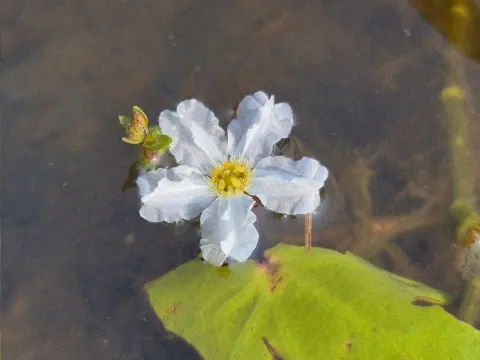
Nymphoides
Nymphoides
Nymphoides, commonly known as floating heart, is a perennial aquatic plant belonging to the Menyanthaceae family. These plants are native to a wide range of climates across the globe, typically thriving in stagnant or slow-moving freshwater ecosystems such as ponds, lakes, and marshes.
What the section contains
 Fringed water lily
Nymphoides peltata
Fringed water lily
Nymphoides peltata
 Korean floating heart
Nymphoides coreana
Korean floating heart
Nymphoides coreana
 Nymphoides aquatica
Nymphoides aquatica
Nymphoides aquatica
 Nymphoides forbesiana
Nymphoides forbesiana
Nymphoides forbesiana
 Nymphoides hastata
Nymphoides hastata
Nymphoides hastata
 Nymphoides humboldtiana
Nymphoides humboldtiana
Nymphoides humboldtiana
 Nymphoides humilis
Nymphoides humilis
Nymphoides humilis
 Nymphoides macrospermum
Nymphoides macrospermum
Nymphoides macrospermum
 Nymphoides parviflora
Nymphoides parviflora
Nymphoides parviflora
 Snowflake water lily
Nymphoides cristata
Snowflake water lily
Nymphoides cristata
 Wavy marshwort
Nymphoides crenatum
Wavy marshwort
Nymphoides crenatum
Nymphoides
Botanically, Nymphoides is distinguished by its heart-shaped leaves that float on the water surface, supported by flexible petioles attached to a creeping rhizome anchored in the sediment. This structure allows the plant to adapt dynamically to varying water levels in its habitat.
For successful cultivation, Nymphoides requires consistent light levels and a water temperature maintained between 18 and 26 degrees Celsius. Sufficient sunlight is essential to stimulate the production of its signature delicate flowers, which add significant aesthetic value to water features.
Regarding soil requirements, the plant prefers nutrient-rich substrates, such as silt, organic compost, or aquatic clay mixes. It is critical to provide adequate space for the root system to spread, as restricted rhizomes often lead to reduced leaf production and overall weakening of the plant.
In terms of economic and practical use, Nymphoides serves as a highly efficient biofilter in water management systems. It extracts excess nutrients, particularly nitrogen, from the water column, which helps prevent algal blooms and maintains water clarity in ornamental ponds.
The primary biological threat to Nymphoides is infestation by aquatic moth larvae, which feed on the underside of the leaves. This activity can rapidly defoliate a plant if not managed, leading to a loss of both aesthetic appeal and photosynthetic capacity.
Rhizome rot is a frequent issue caused by excessive organic matter accumulation and poor water circulation around the root zone. Ensuring a healthy, oxygenated environment is crucial to preventing the anaerobic decay of the plant's anchor structures.
Fungal infections, often manifested as necrotic spots on the leaves or petioles, can develop during periods of high humidity and low water flow. These conditions require the removal of affected parts and improved aeration to stop the spread of the pathogen.
Competition from aggressive invasive weeds or filamentous algae can severely hamper the growth of Nymphoides by blocking sunlight and nutrients. Regular maintenance of the pond's ecosystem is necessary to ensure the plant remains dominant and healthy.
Mechanical damage caused by large koi or other bottom-feeding fish can disrupt the rhizome, making the plant susceptible to secondary infections. Using physical barriers or dedicated planting baskets is a standard agricultural practice to protect the plant from such interference.