
Korean floating heart
Nymphoides coreana
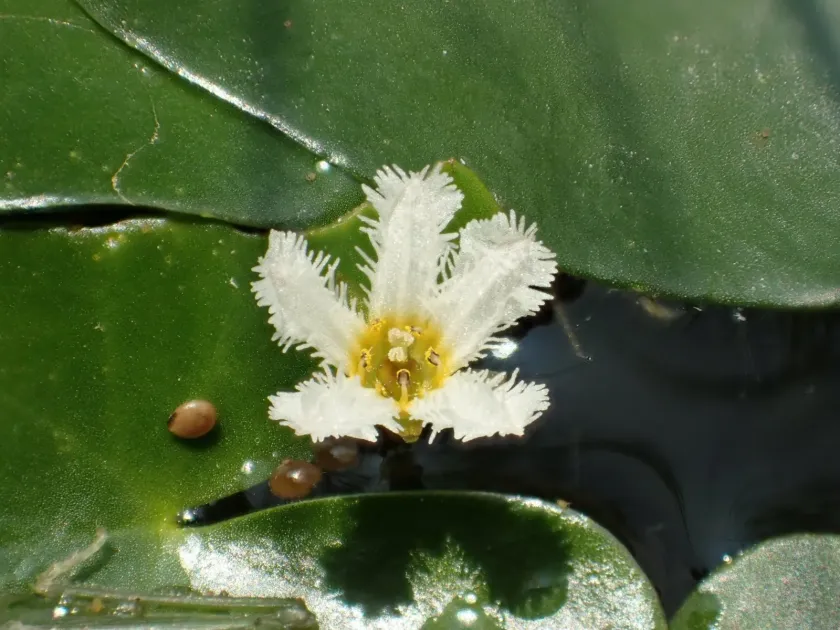
Description
Growing requirements
The Korean floating heart (Nymphoides coreana) is a perennial aquatic plant belonging to the Menyanthaceae family. It is native to the freshwater habitats of East Asia, thriving in shallow ponds and slow-moving streams where organic sediment is abundant.
The plant is defined by its distinct heart-shaped leaves that float gracefully on the surface. These leaves are supported by long, flexible petioles, while the root system is anchored firmly into the substrate of the water body, allowing it to withstand varying water levels.
Successful cultivation requires ample sunlight and calm water conditions. The species prefers well-lit environments and avoids areas with turbulent water or strong currents, which can damage the delicate floating foliage.
Soil requirements involve a nutrient-rich muddy bottom or a specialized aquatic plant substrate. When planting in artificial ponds, it is essential to ensure that the water temperature remains within the moderate range, typically between 20°C and 25°C for optimal growth rates.
The primary use of this plant is in ornamental water gardening. It is highly valued for its aesthetic appeal, as it creates dense, floating mats that enhance the visual quality of water features while providing shade for aquatic life below the surface.
Main diseases and pests
Insect pests are the most common threat to the Korean floating heart. Leaf-eating beetles and moth larvae can quickly skeletonize the foliage, necessitating regular inspections and prompt intervention to maintain the health of the plant.
Fungal diseases can develop if the water becomes stagnant or overly nutrient-dense. Maintaining good water quality through natural filtration systems or periodic water changes is crucial for preventing infections and root decay.
Invasive algae or more vigorous aquatic species can easily outcompete the floating heart for resources. Managers of water features should practice routine maintenance, such as thinning out dense growth to ensure proper light penetration.
Environmental stress, such as extreme water level fluctuations or high chemical inputs from fertilizers, can severely impact plant vitality. It is important to avoid run-off from agricultural areas or excessive application of lawn products near the pond.
Extreme cold poses a risk in regions with freezing winters. In such climates, it is recommended to either sink the plants into the deeper, non-freezing zones of the pond or move them to an indoor climate-controlled environment until spring.