
Nymphoides forbesiana
Nymphoides forbesiana
Description
Growing requirements
Nymphoides forbesiana is a member of the Menyanthaceae family, characterized as an aquatic perennial plant. Native to tropical zones, it is adapted to shallow, calm water bodies where it anchors into the bottom substrate.
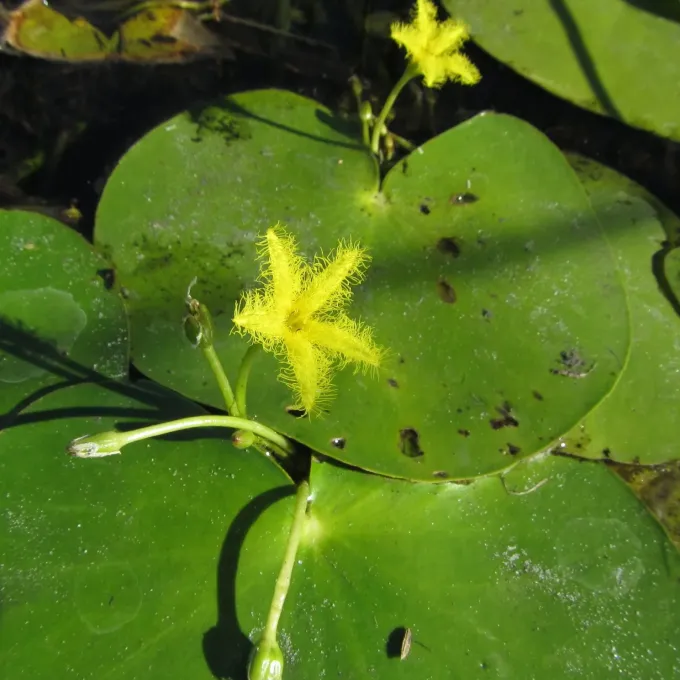
The botanical architecture of this species consists of heart-shaped leaves that float on the water surface, supported by long petioles reaching from the rootstock. This structure allows the plant to maximize sunlight absorption while stabilizing the aquatic environment.
Optimal growth conditions require water temperatures between 22 and 28 degrees Celsius. Stability in the thermal environment is essential to prevent physiological shock and maintain steady vegetative growth cycles throughout the year.
The soil requirements involve a nutrient-rich substrate, typically composed of silt and organic matter, which provides the necessary minerals for the root system to thrive. Proper substrate depth is also critical for long-term plant anchoring.
In terms of agricultural use, this plant is primarily utilized for its aesthetic value in ornamental ponds and large-scale aquascaping. It provides essential shade, which helps regulate water temperature and suppresses the growth of competitive algae.
Main diseases and pests
The primary threats include the infestation of epiphytic algae on the leaf surfaces, which restricts photosynthesis and weakens the plant over time.
Herbivorous aquatic pests, such as certain species of snails, can cause significant damage to the leaf structure if their population is not controlled within the environment.
Disease outbreaks, particularly fungal infections, often occur in stagnant water conditions where there is insufficient oxygen exchange at the root level.
Nutrient deficiency, indicated by yellowing or chlorosis of the leaves, is a common issue that must be addressed through managed fertilization of the sediment layer.
To mitigate these threats, it is necessary to perform routine water quality checks and ensure a balance of mineral nutrients, maintaining a healthy habitat for the plant to resist stress.