
Nymphoides parviflora
Nymphoides parviflora
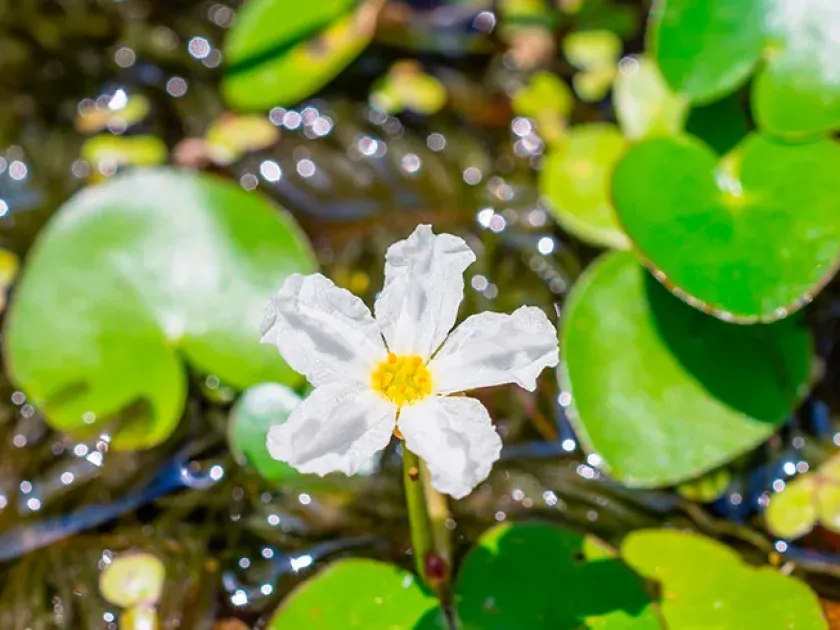
Description
Growing requirements
Nymphoides parviflora is a member of the Menyanthaceae family. It is a perennial aquatic plant native to tropical and subtropical regions across Asia and parts of Australia, typically thriving in slow-moving or stagnant freshwater habitats.
Botanically, this species is defined by its heart-shaped floating leaves and small, delicate flowers that emerge above the water surface. The root system remains anchored in the sediment, allowing the plant to sustain itself in various aquatic environments.
Optimal growth requires consistent water temperatures ranging from 22 to 28 degrees Celsius. The plant prefers high light intensity, which is essential for the rapid production of leaves and the maintenance of its characteristic blooming cycle.
When cultivated, the substrate must be rich in organic matter. A mixture of loam, sand, and fine silt is considered ideal for supporting the root development of Nymphoides parviflora in ponds or large-scale aquatic installations.
The plant serves primarily as an ornamental species used in aquascaping and pond management. Its presence helps improve water quality by acting as a natural filter and provides crucial structural habitats for various microorganisms and small fish species.
Main diseases and pests
The primary threats to the health of this culture include infestations of filamentous algae that compete for light and space. Additionally, aquatic pests, such as leaf-eating snails and specific insect larvae, can cause significant damage to the foliage.