
Fringed water lily
Nymphoides peltata
Description
Growing requirements
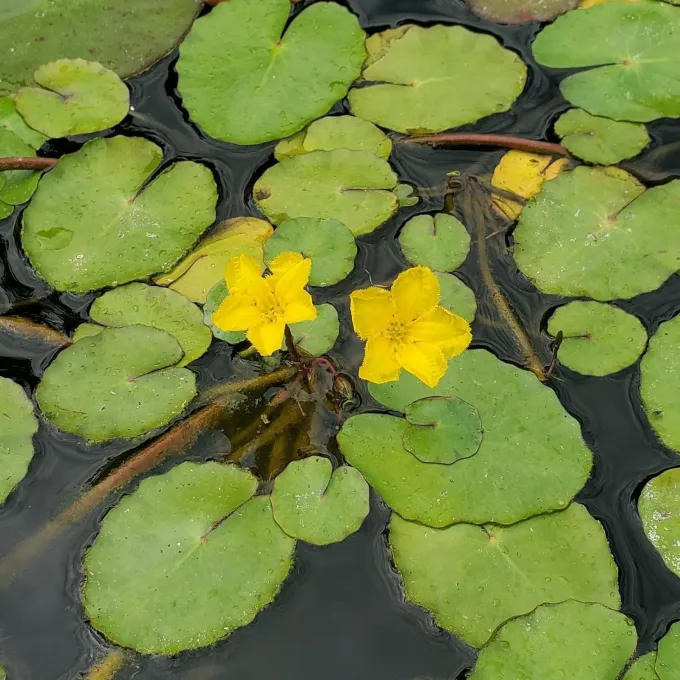
The fringed water lily (Nymphoides peltata) is a perennial aquatic plant belonging to the Menyanthaceae family. Native to Eurasia, it is commonly found in stagnant or slow-moving freshwater habitats across temperate regions.
The plant grows from a creeping rhizome anchored in the bottom silt. Its long petioles reach the water surface, supporting floating leaves that resemble those of the Nymphaea genus, although the species is not a true water lily.
For optimal growth, it requires a stable water depth ranging from 30 to 100 cm. The plant thrives in nutrient-rich sediments and prefers calm water conditions where the soil substrate remains relatively undisturbed.
Sunlight exposure is essential for the plant’s health. It performs best in full sun, which facilitates the production of its characteristic yellow, fringed-edged flowers throughout the summer season.
When cultivating in artificial ponds, it is crucial to manage its rapid spread. Without regular maintenance or containment, the plant can quickly cover the entire water surface, reducing gas exchange for other aquatic life.
Main diseases and pests
While generally hardy, the fringed water lily can be susceptible to aphid infestations, which primarily target the undersides of the floating leaves during warm, dry periods.
Fungal pathogens such as leaf spot can occur in stagnant water with poor circulation, leading to the yellowing and subsequent decay of the leaf tissues.
Aquatic insect larvae can act as minor pests by burrowing into the submerged stems, which may weaken the plant’s structural integrity and make it more vulnerable to secondary infections.
Excessive algal growth in the surrounding water can compete with the plant for nutrients, potentially stunting its growth if the water chemistry is not properly balanced.
Integrated pest management strategies should focus on maintaining water quality and manual removal of heavily infested leaves to minimize the spread of pests and diseases.