
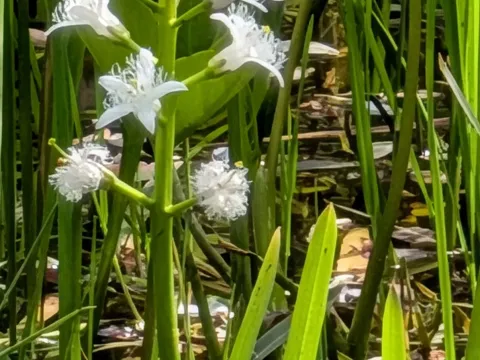
Bogbean
Menyanthes
Bogbean is typically propagated vegetatively by dividing its vigorous, creeping rhizomes during the spring or autumn months.
What the section contains

Bogbean
Seed propagation is possible but less common due to the requirement for cold stratification and the slow growth rate of initial seedlings.
When planting, it is crucial to place the rhizomes in shallow water or saturated soil, ideally at a depth of 10 to 20 centimeters.
Ensuring the plant is placed in a stable habitat allows it to establish rapidly, eventually forming an extensive mat across the water surface.
Spacing should be managed to prevent overcrowding, allowing each plant to access sufficient nutrients and sunlight for optimal biomass production.
Bogbean is a perennial aquatic flowering plant belonging to the Menyanthaceae family, naturally found in wetlands and fens.
It thrives in acidic, nutrient-rich soils and requires a permanent water source, functioning effectively as a hydrophytic species.
The plant is highly resilient to cold climates, showing remarkable winter hardiness and the ability to survive submerged under ice.
Light requirements are significant, meaning the plant grows best in open, sunny locations without overhead shade from tall trees or shrubs.
Clean water is essential, as the accumulation of pollutants can inhibit growth and compromise the quality of the harvested medicinal plant material.
Bogbean is generally resistant to most pests and diseases, largely due to the presence of bitter compounds that act as a natural deterrent.
The most common threat is habitat modification, particularly significant drops in water level that leave the root system exposed to air and desiccation.
In certain environments, insect larvae may feed on the foliage, though rarely in densities that would require chemical intervention or control.
Algal blooms caused by nutrient overload in the water body can create competitive pressure, potentially stifling the growth of the bogbean plants.
Good water management and periodic monitoring of the site are sufficient to keep the plant population healthy and free from significant damage.
The harvest of bogbean leaves typically takes place during the flowering stage, between late spring and early summer, for maximum potency.
Carefully snip the leaves using sharp shears, leaving a short portion of the petiole to ensure the survival and regeneration of the mother plant.
Avoid pulling the plant up by the roots, as this destructive practice can eliminate local populations and reduce future harvest yields.
Drying must be performed quickly in a shaded, well-ventilated area to prevent degradation of the therapeutic chemical constituents like iridoids.
The final product should be stored in cool, dry conditions to preserve the bitter taste and medicinal efficacy required for pharmaceutical applications.