
Villarsia
Villarsia
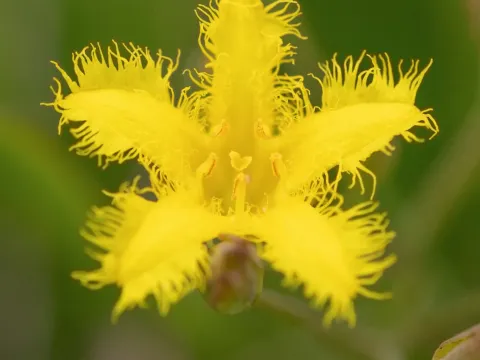
Villarsia is a genus of perennial aquatic and wetland plants belonging to the Menyanthaceae family. These plants are widely known for their attractive, often yellow flowers and distinctive foliage that either floats on the surface of the water or stands erect in shallow pond areas.
What the section contains
Villarsia
The natural range of the genus is primarily centered in Australia, with additional species native to parts of South Africa and Southeast Asia. As hydrophytes, these plants are perfectly adapted to environments where their roots are submerged in saturated soil, while their leaves have contact with the atmosphere.
Optimal growth requires high light intensity and warm water temperatures, as these plants thrive during the growing season in sheltered aquatic systems. A nutrient-rich substrate, consisting of silt or specialized aquatic potting mix, is essential for supporting the plant's developing root system.
Cultivation practices involve maintaining a stable water level and preventing extreme temperature fluctuations. In controlled settings, it is important to provide sufficient space for lateral growth, as the species tends to spread via rhizomes, filling available niche spaces within a water garden.
Regular maintenance of the habitat is necessary to prevent the buildup of stagnant matter. Thinning out dense clumps is a standard agronomic practice for Villarsia to ensure that light penetrates the lower levels of the water column, promoting overall plant health and continuous bloom production.
The primary threats to Villarsia health include fungal pathogens that exploit high humidity and poor water circulation. Leaf spots caused by fungi can rapidly spread across the foliage, particularly during humid summer months when airflow around the pond is insufficient.
Pests such as aphids and specialized aquatic beetles are known to feed on the tender tissues of the leaves and stalks. Their presence can severely weaken the plant, making it more susceptible to environmental stress and reducing the aesthetic value of the aquatic feature.
Competition from invasive algae poses a significant risk to the plant's development. Excessive algal blooms deplete dissolved oxygen and nutrients in the water, which directly interferes with the photosynthesis and nutrient uptake processes of the Villarsia plants.
Bacterial rot, often associated with the decomposition of surrounding organic debris, can lead to the softening and decay of the plant's base. Keeping the aquatic environment free of excess rotting leaves and organic waste is crucial for preventing the onset of these destructive infections.
Integrated pest and disease management for this crop focuses on monitoring the physical condition of the submerged parts. By ensuring clean water and healthy ecological balance, gardeners can effectively mitigate the impact of common threats without relying on intensive chemical interventions.