
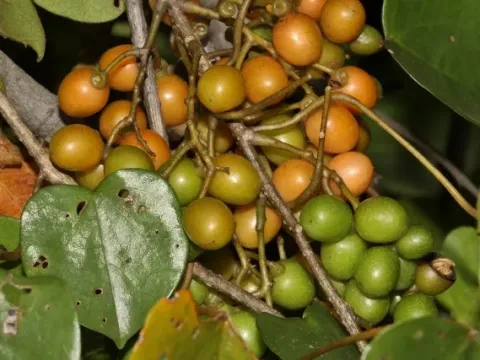
Hyalosepalum
Hyalosepalum
The sowing of Hyalosepalum seeds should be conducted in controlled greenhouse environments to ensure the specific thermal requirements for germination are met.
What the section contains

Hyalosepalum
Spring is the ideal season for sowing, as the increasing natural light promotes faster seedling development and improves overall plant health during the early stages.
Pre-treatment of seeds, such as soaking or stratification, is often necessary to break dormancy and increase the uniformity of emergence in nursery beds.
Seeds should be sown in a well-aerated, porous substrate at a shallow depth to prevent rot and allow the delicate embryonic shoots to emerge efficiently.
Transplanting into final cultivation zones should only occur when temperatures are consistently stable, as young plants are highly sensitive to thermal shocks.
As a member of the Menispermaceae family, Hyalosepalum is a climbing vine that requires robust vertical supports to reach its full morphological potential.
The plant thrives in tropical and subtropical climates, requiring high relative humidity levels to maintain turgor pressure in its expansive foliage.
Soils must be fertile, rich in organic matter, and possess excellent drainage characteristics to prevent the root suffocation that occurs in compacted soils.
Consistent moisture management is critical; while the plant requires regular irrigation, it must be protected from waterlogged conditions that trigger root decay.
Optimal growth is observed under diffused light conditions, as direct, intense sunlight can damage the sensitive leaves and inhibit the rate of photosynthesis.
Root rot caused by pathogenic fungi remains the primary threat to Hyalosepalum plantations, especially in poorly drained or over-irrigated substrates.
Spider mites are a common pest in indoor production, thriving in low-humidity environments and rapidly causing chlorosis in affected leaf tissues.
Monitoring for insect infestations is essential, as localized outbreaks can quickly spread throughout a greenhouse if not addressed with timely biological interventions.
Adherence to strict sanitation protocols during cultivation helps to minimize the pressure from soil-borne pathogens and airborne fungal spores.
Sustainable pest management strategies should prioritize the use of natural predators and botanical sprays to maintain the integrity of the plant biomass.
Harvesting Hyalosepalum is typically focused on the extraction of specific plant parts, which are valued for their pharmacological and biochemical properties.
The harvest timing is determined by the cessation of vegetative growth, as this coincides with the peak concentration of secondary metabolites in the plant tissues.
Roots are harvested with specialized tools to ensure minimal mechanical damage, followed by immediate cleaning to remove soil and extraneous debris.
Post-harvest drying must be performed in temperature-controlled environments to prevent the degradation of heat-sensitive active compounds within the material.
Final storage requirements include moisture-proof packaging and cool, dark conditions to ensure the long-term stability and quality of the harvested crop.