
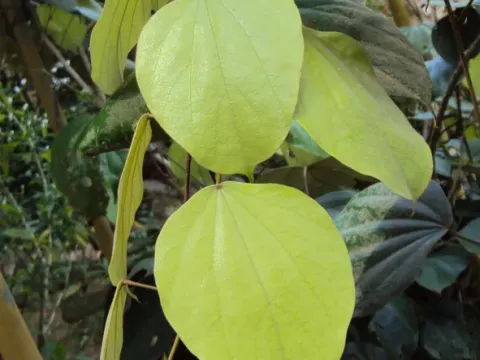
Coscinium
Coscinium
Coscinium is a genus of woody climbing vines belonging to the Menispermaceae family. The most prominent species, Coscinium fenestratum, is widely recognized in traditional medicine as tree turmeric.
What the section contains


Coscinium
This plant is native to the tropical forests of South and Southeast Asia. It thrives in environments characterized by consistently high humidity, warm temperatures, and significant annual rainfall.
For cultivation, the plant requires fertile, loamy soils with excellent drainage properties. Rich organic matter content is essential to support the vigorous growth of the vine's root system.
Agrotechnical management involves providing sturdy vertical structures, as the plant is a natural climber. It prefers shaded or semi-shaded environments, avoiding harsh, direct sunlight that can damage its foliage.
The economic value of Coscinium lies in its stem, which is a rich source of berberine. This alkaloid is used globally in pharmaceutical research and traditional medical practices, requiring sustainable cultivation strategies.
The primary threat to Coscinium is the over-exploitation of wild populations, which has led to a status of vulnerability in many of its natural habitats across Asia.
Root rot, caused by excessive soil moisture and poor drainage, remains the most significant pathological threat for cultivated vines in greenhouse or field settings.
Infestations by scale insects and spider mites often target the stems and leaves, leading to decreased vigor and overall plant decline if left unmanaged.
Fungal diseases can proliferate rapidly if air circulation is poor, particularly in high-humidity environments required for the plant's growth.
Nutrient deficiencies, particularly involving trace elements, can manifest as foliage yellowing, hindering the plant's ability to produce necessary chemical compounds.