
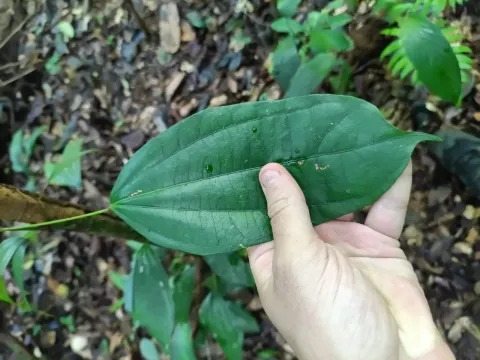
Curarea
Curarea
The genus Curarea belongs to the Menispermaceae family and comprises woody lianas native to the tropical rainforests of South America. These plants require a stable, high-humidity environment with consistent tropical temperatures to maintain their physiological processes throughout the year.
What the section contains

Curarea
Curarea typically inhabits well-drained but consistently moist soil environments rich in organic matter. As climbing plants, they rely on mature canopy trees for structural support, which allows them to reach sufficient sunlight in the dense environment of the Amazon basin.
Agricultural cultivation of Curarea is not practiced commercially due to the plant's highly specific ecological niche and the complexity of reproducing a rainforest ecosystem. Conservation efforts currently focus on protecting its natural habitat rather than domestic propagation.
Botanically, Curarea species are characterized by their strong, woody stems and leathery, alternate leaves. These features are evolutionary adaptations designed to survive in the competitive, shadowed environment of the understory while reaching for higher canopy levels.
Historically, the genus holds significant value in indigenous Amazonian cultures. Certain species, such as Curarea toxicofera, were identified as critical components for preparing traditional hunting poisons, a practice that highlights the rich phytochemical profile of these plants.
The primary threat to Curarea populations is the widespread deforestation of the Amazon rainforest. As the primary forest canopy is destroyed, these lianas lose the essential structural support they need for growth and reproductive success.
In their natural environment, Curarea can be susceptible to various fungal pathogens that thrive in high-humidity conditions. Leaf spotting and necrotic lesions are common symptoms when the local microclimate becomes stagnant or overly saturated.
Insect pests are generally deterred by the potent alkaloids stored within the plant tissues. This chemical defense mechanism serves as an evolutionary advantage, protecting the plant from most local herbivores that would otherwise threaten its survival.
The pharmaceutical interest in the alkaloids found in Curarea may pose a future risk of over-harvesting. Sustainable management and ethical sourcing are crucial to ensure that research activities do not further endanger these vulnerable tropical populations.
Environmental stability remains the most important factor for the health of Curarea. Variations in local precipitation levels or shifting temperature gradients can negatively impact the plant's ability to flower and disperse seeds effectively.