
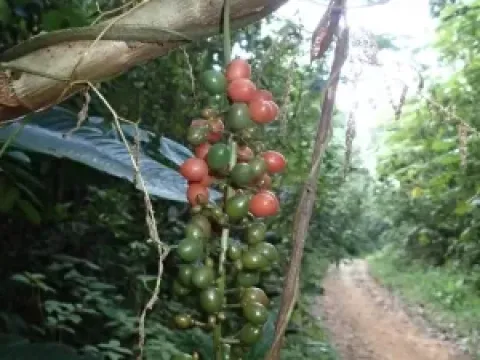
Dioscoreophyllum
Dioscoreophyllum
Dioscoreophyllum, specifically Dioscoreophyllum cumminsii, is a perennial flowering vine belonging to the Menispermaceae family. It is native to the tropical forests of West and Central Africa, where it thrives as a climber in shaded, humid environments.
What the section contains

Dioscoreophyllum
The plant is biologically characterized by its tuberous roots and rapid-growing vine stems. It relies on the dense forest canopy for structural support and protection from intense direct sunlight, which is vital for maintaining the plant's health.
Cultivation requires conditions that closely mimic its natural habitat: consistent warmth, high relative humidity, and nutrient-rich, well-draining forest soil. It does not tolerate frost or prolonged drought, making it suitable only for specific tropical climates.
Agricultural management includes providing vertical trellises or supports to facilitate vertical growth, which helps in managing plant density and optimizing harvest. Proper air circulation around the foliage is necessary to prevent fungal diseases in high-humidity settings.
Soil management involves consistent organic fertilization to support the energy-intensive production of its fruit. Maintaining a stable pH balance is also crucial to ensure the optimal uptake of micronutrients necessary for fruit development.
Harvesting Dioscoreophyllum is a selective process, as the berries ripen incrementally. Harvesters monitor the fruit clusters, identifying the bright red berries that indicate peak accumulation of monellin, a natural protein-based sweetener.
Due to the delicate nature of the fruit, hand-picking is the standard harvesting method. Field workers must navigate the dense vines carefully to collect the fruit without damaging the stems, ensuring the plant's longevity for future harvests.
Post-harvest handling is critical because monellin is highly sensitive to heat and enzymatic degradation. Once picked, berries must be cooled or processed immediately to maintain the chemical integrity of the protein.
Logistics for transport must be optimized to reduce the time between harvest and processing. Industrial extraction facilities are often positioned near cultivation zones to prevent loss of quality during long-distance shipping.
Quality control during the harvest involves sorting out damaged or immature berries, as these do not contain the desired concentration of the sweetening agent. Strict adherence to these protocols ensures a high-value raw material for the food additive market.