
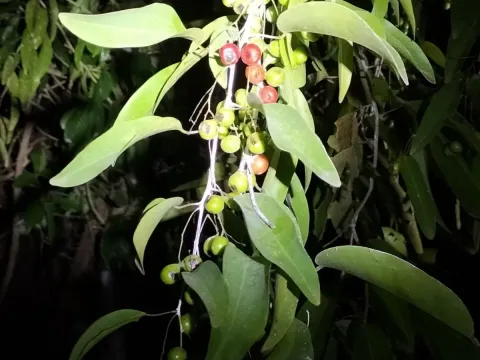
Hypserpa
Hypserpa
The genus Hypserpa belongs to the family Menispermaceae. These are woody climbing plants native to the tropical and subtropical regions of Southeast Asia and Australia, where they occupy diverse forest habitats ranging from lowland rainforests to montane vegetation.
What the section contains

Hypserpa
For successful cultivation, Hypserpa requires a stable tropical environment. High humidity and consistent warmth are essential for vegetative development. The plant is highly sensitive to cold, which necessitates keeping it in controlled climate facilities in non-tropical regions.
Soil requirements focus on high organic content and excellent drainage. The roots are prone to oxygen deprivation if the medium remains waterlogged for extended periods, making sandy loam mixes with added perlite or bark ideal for container culture.
Light management is crucial, as the species is adapted to the filtered light of the forest floor or canopy edges. Providing bright, indirect sunlight or utilizing shade cloths prevents leaf scorch and promotes healthy, lush foliage growth characteristic of the genus.
Botanically, Hypserpa is defined by its twining stems and alternate leaf arrangement. The plant’s resilience is tied to its specialized vascular structure, which allows it to transport nutrients effectively even when climbing to great heights on host trees in the wild.