
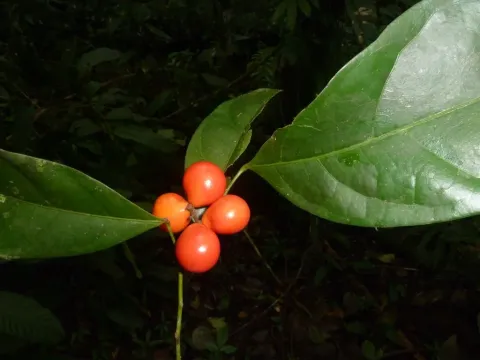
Hyperbaena
Hyperbaena
Hyperbaena is a genus within the Menispermaceae family, consisting mainly of woody lianas and shrubs distributed in tropical regions. Propagation is primarily achieved through seeds, which require humid and warm conditions to germinate successfully.
What the section contains

Hyperbaena
In nursery environments, fresh seeds should be sown immediately after harvesting. Delaying the sowing process often results in rapid desiccation and a significant decrease in viability, as these seeds are adapted to the moist floor of tropical forests.
The substrate must be light, porous, and enriched with organic matter. Proper moisture management is crucial during the early stages of development to support the emergence of delicate seedlings.
Vegetative propagation via cuttings is a viable alternative for clonal multiplication. This method requires the application of growth regulators to enhance rooting efficiency in a controlled climate greenhouse.
Establishing a permanent planting site involves selecting areas with vertical support systems. As a climbing plant, Hyperbaena requires structural integrity to reach its full vegetative potential and ensure healthy canopy development.
The natural habitat of Hyperbaena is found in the Neotropics, particularly in humid forest environments. It thrives in climates with consistent temperatures and high annual rainfall throughout the year.
Edaphic requirements are focused on well-drained soils with a slightly acidic to neutral pH. Soil compaction and waterlogging are the primary environmental stressors that limit the successful cultivation of this genus.
Light intensity should be managed carefully; while the plant is shade-tolerant, it requires filtered light for vigorous growth. Excessive direct sunlight can cause leaf chlorosis and stunted growth in young plants.
Maintaining a consistent irrigation schedule is essential, especially during the establishment phase. While mature plants show some degree of resilience to minor dry spells, prolonged water deficit significantly impairs development.
Given the tropical origin, Hyperbaena is intolerant to frost or temperatures below 10 degrees Celsius. Climate control is mandatory for any cultivation attempts conducted outside the tropical zone.
The cultivation of Hyperbaena can be challenged by various fungal pathogens that thrive in high-humidity environments. Leaf spots and root rot are common issues if drainage is insufficient or air circulation is poor.
Pest management involves monitoring for sap-sucking insects such as aphids and scale insects, which often colonize the tender tips of climbing vines. These pests can transmit viral infections, weakening the plant.
Root-knot nematodes can pose a significant threat in intensive cultivation systems, particularly if soil sanitation protocols are neglected during the land preparation stage.
Integrated Pest Management (IPM) strategies are recommended to mitigate these risks. Utilizing biological control agents or targeted, low-toxicity interventions helps maintain the health of the specimens.
Regular monitoring for symptoms of biotic stress allows for timely intervention. Removing affected plant parts and ensuring a sterile environment in the root zone are foundational practices for successful plant protection.
Harvesting Hyperbaena is largely restricted to scientific or ethnobotanical applications, focusing on leaves, bark, or roots for secondary metabolite analysis. Manual harvesting is the standard practice due to the climbing growth habit.
The timing of harvest is critical for chemical consistency. Samples should be collected during the period of peak metabolic activity to ensure the concentration of alkaloids is optimal for research objectives.
Post-harvest handling requires immediate processing, such as air-drying in shaded, well-ventilated areas. Controlled drying prevents the degradation of thermolabile compounds present in the plant tissues.
Storage should be conducted in airtight, cool containers to protect the dried material from humidity and light. Proper labeling and documentation of the harvest date and site are essential for botanical research.
Sustainable harvesting practices are paramount, particularly when sourcing from natural populations. These methods ensure that the impact on the local ecosystem is minimized while maintaining resource availability for future studies.