
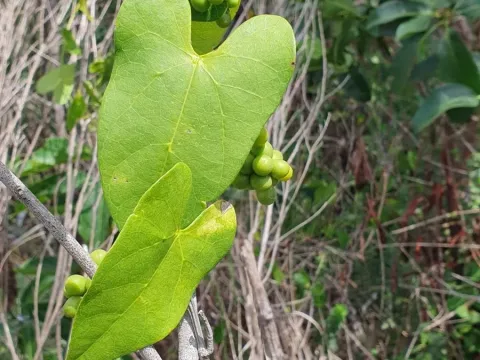
Odontocarya
Odontocarya
Odontocarya is primarily a wild-growing genus of tropical vines; therefore, large-scale agricultural sowing is not a common practice.
What the section contains

Odontocarya
In its natural habitat, the plant propagates through seeds contained in drupes, which are dispersed by forest fauna throughout the ecosystem.
For scientific cultivation or botanical research, seeds are planted in loose, organic-rich substrates that mimic the floor of a rainforest.
Maintaining consistent high humidity and warmth is crucial for the germination of these tropical seeds within greenhouse environments.
Seedlings must be shielded from intense direct sunlight while receiving steady moisture to ensure the development of strong initial root systems.
As a member of the Menispermaceae family, Odontocarya thrives in tropical climates characterized by high humidity and year-round warmth.
The plant prefers well-drained, fertile forest soils that are rich in nutrients and capable of retaining water without becoming stagnant.
As a climbing vine, the plant requires sturdy vertical structures or host trees to support its upward growth toward the canopy.
The species is highly sensitive to thermal fluctuations and requires a consistent environment to maintain its metabolic functions.
Optimal growth is observed in locations with filtered light, simulating the shaded and humid conditions of a tropical forest environment.
There is no defined agricultural yield for Odontocarya, as the plant is not cultivated for mass food production or traditional crops.
The economic value of this plant is concentrated in the harvest of its bark, roots, and leaves for medicinal and ethnographic research.
Sustainable harvesting is essential, as the availability of raw material depends entirely on the health and density of wild populations.
The yield of bioactive compounds, particularly alkaloids, varies significantly based on the age of the vine and the local microclimate.
Proper management of wild resources is necessary to prevent habitat degradation and to ensure the longevity of the species' population.
Fungal infections, often exacerbated by stagnant water and poor air circulation, represent a primary threat to the health of the vines.
Various insects, including foliage-eating beetles, can cause significant damage to the plant's vegetative mass during peak growth periods.
Habitat destruction due to deforestation is the most significant threat to the natural population of Odontocarya in its native range.
Improper collection methods for medicinal purposes can lead to the death of the vine by damaging its sensitive root and stem structure.
- Root rot from soil waterlogging
- Infestations by leaf-mining insects
- Extreme weather fluctuations
- Loss of natural forest canopy support