
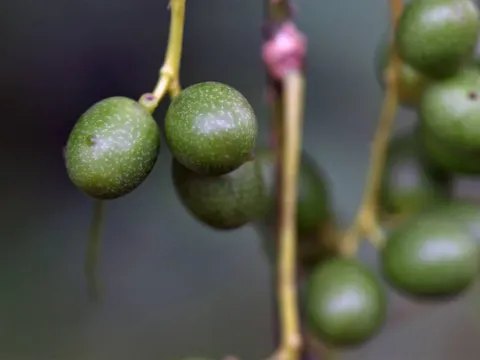
Chondrodendron
Chondrodendron
Chondrodendron, particularly the species Chondrodendron tomentosum, is a perennial woody vine naturally occurring in the tropical rainforests of South America.
What the section contains

Chondrodendron
It is not a conventional agricultural crop, but its medicinal importance makes it a subject of interest for small-scale botanical cultivation.
Propagation is typically achieved through stem cuttings, which allow for the successful reproduction of specific medicinal-grade clones.
The planting process requires high humidity and shade, mimicking the environment of the Amazonian canopy floor to ensure the survival of young vines.
Establishing a new plantation requires a focus on soil moisture levels and ensuring that the vines have adequate space and supports for vertical growth.
The plant thrives in a tropical climate, requiring constant temperatures between 22 and 28 degrees Celsius throughout the entire growth cycle.
High air humidity, often exceeding 75 percent, is essential for the healthy development of its leaves and stems to prevent dehydration.
Well-draining, humus-rich soil that remains moist but never waterlogged is necessary to prevent root rot in these sensitive perennial vines.
Chondrodendron requires significant light but must be protected from direct, harsh midday sunlight, which can scorch its delicate foliage.
Natural canopy cover or artificial shading structures are recommended to provide the dappled light conditions that the plant prefers in its natural habitat.
The yield of Chondrodendron refers to the harvesting of its roots and bark, which are processed to extract potent plant-based alkaloids.
Since the plant grows relatively slowly, harvesting is a long-term commitment, typically requiring five or more years for the biomass to be ready.
Yield efficiency is heavily dependent on the concentration of specific alkaloids in the plant tissue, which is influenced by soil nutrient composition.
Proper management of the plants can result in sustainable yields, where portions of the root system are harvested without destroying the plant.
Standardized greenhouse cultivation significantly improves the consistency of the active compounds compared to harvesting wild-grown specimens.
Fungal infections are the most significant threat to the plant, especially when grown in environments with high humidity and poor air circulation.
Invasive insects, including local leaf-eating beetles and ants, can cause considerable structural damage to the vines if not managed properly.
Root diseases caused by soil-borne pathogens are common in poorly drained substrates and can lead to rapid plant mortality.
Competitiveness with surrounding vegetation can suppress the growth of young Chondrodendron specimens during the critical establishment phase.
Climate instability, particularly drastic drops in temperature or prolonged drought, can severely weaken the plant and make it susceptible to pests.
Harvesting involves the careful extraction of root and bark materials, which must be done with precision to protect the plant's long-term health.
Timing the harvest according to the plant's metabolic stage ensures that the chemical concentration of alkaloids is at its maximum potential.
Once gathered, the material is cleaned and subjected to a slow, controlled drying process to prevent the degradation of chemical compounds.
Processing involves milling the bark and roots into a fine powder or extracting liquids for use in pharmacological research and applications.
Sustainable harvesting practices are essential to maintain the viability of the crop and ensure the long-term availability of this medicinal resource.