
Serendipity berry
Dioscoreophyllum volkensii
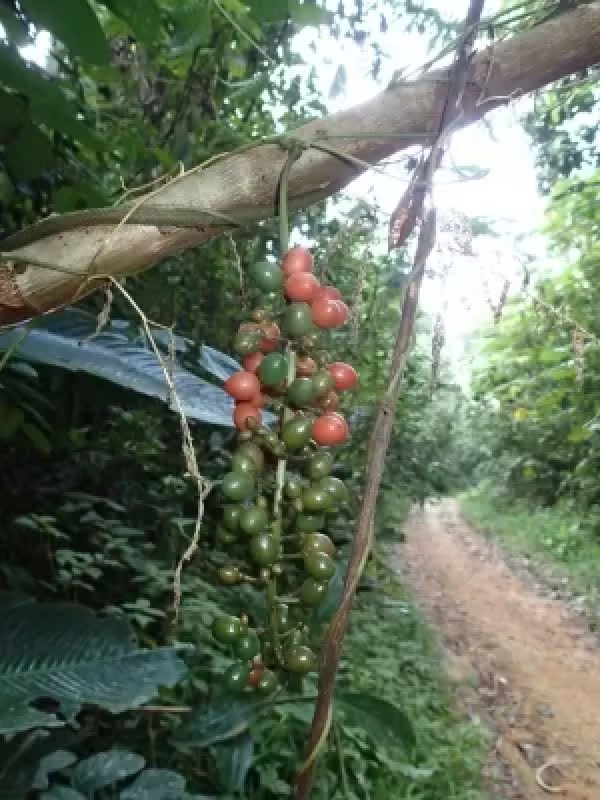
Description
Growing requirements
Dioscoreophyllum volkensii, commonly known as the Serendipity berry, is a perennial flowering vine belonging to the Menispermaceae family. It is native to the tropical rainforests of West and Central Africa, where it thrives in the understory.
The plant requires a high-humidity environment and consistent warm temperatures to achieve optimal growth. It is strictly a tropical species and cannot survive in regions with frost or prolonged cool weather conditions, necessitating greenhouse cultivation in temperate zones.
Soil requirements involve a deep, organic-rich, and well-draining substrate. The plant performs best in soils with moderate acidity, mirroring the leaf-litter-rich environment of its natural forest habitat where it evolved to climb towards light.
Botanically, the plant is famous for its small, red, berry-like fruits containing the protein monellin. This compound is known for its intense sweet taste, which is thousands of times sweeter than sucrose by weight, making it a subject of extensive biochemical research.
Agricultural management requires the provision of vertical structures for climbing, as the vine's habit is to use tendrils to scale nearby vegetation. Without proper trellising, the plant's yield potential significantly decreases due to poor light exposure and lack of air circulation.
Harvesting
The harvest period is determined by the development of the fruits' deep red coloration. Harvesting must be carried out with great care to avoid bruising the soft berries, which are highly perishable and should be processed or extracted shortly after picking.