
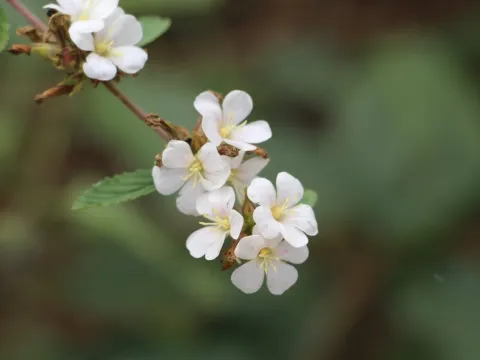
Melochia parviflora
Melochia parviflora
Melochia parviflora is a heat-loving crop, making the sowing timing highly dependent on soil temperature. Planting should occur once the soil has warmed up to at least 20°C to ensure rapid and uniform germination.
What the section contains
Melochia parviflora
In professional farming, seeds are typically sown in rows with a spacing of 40-50 cm. This layout provides enough space for the plant to develop a robust root system and a significant vegetative canopy.
The optimal planting depth is between 1.5 and 2 centimeters. Using a roller after sowing helps improve soil-to-seed contact, which is crucial for retaining moisture and ensuring successful emergence.
Pre-sowing treatment, such as soaking or mechanical scarification, is highly recommended. The seeds possess a hard seed coat that can delay germination if sown directly into the field without preparation.
Post-emergence thinning is a necessary step to maintain an optimal plant density. Proper spacing prevents intra-species competition, allowing each plant to reach its full yield potential.
Belonging to the Malvaceae family, Melochia parviflora is a herbaceous plant native to the tropical and subtropical regions of the Americas. It thrives in high-temperature environments.
This crop is highly heliophilic and requires full sun exposure. Even partial shade can lead to stunted growth and reduced biomass, making site selection critical for maximizing productivity.
Soil requirements include well-drained, fertile loams with a neutral or slightly acidic pH. The plant is sensitive to waterlogging, as stagnant water in the root zone quickly causes root system damage.
While the plant shows some tolerance to short dry spells, consistent irrigation is necessary for steady vegetative growth. Adequate moisture levels during the peak growing season are essential for high yields.
The use of integrated nutrient management, focusing on balanced fertilizer application, supports the development of strong, fibrous stems, which is the primary economic goal of the cultivation.
The yield of Melochia parviflora is directly linked to the intensity of management practices. In optimal conditions, the plant produces a significant amount of high-quality biomass suitable for fiber production.
The primary agricultural output is the stem fiber, which is used in textile industries. The quality and length of the fiber depend heavily on the timing of the harvest relative to the flowering stage.
When grown for seed production, yield is measured by the quantity and quality of capsules produced per plant. High-quality seeds ensure uniform germination in subsequent crop cycles.
Nitrogen-based fertilizers are typically used during the active stem growth phase to boost biomass. However, excessive application must be avoided to prevent stem lodging caused by heavy rains or wind.
Economic feasibility is generally high when good agricultural practices are followed, making Melochia an interesting option for diversification in tropical farming systems.
Fungal diseases affecting the roots are the most significant threat to this crop. These are often triggered by improper irrigation and poor soil drainage, which promote the growth of pathogens.
Leaf-eating caterpillars are the primary insect pests, capable of rapidly consuming the plant's foliage. Regular field scouting is essential to identify infestations before they cause economic loss.
Aphids can be a major challenge during the early stages of growth, causing leaf curling and transmitting viruses. Early intervention with biological control methods is the preferred strategy.
Spatial isolation from wild Malvaceae species is recommended to prevent the spread of diseases. A robust crop rotation plan helps disrupt the lifecycle of soil-borne pests and pathogens.
Integrated Pest Management (IPM) practices, combining manual monitoring and selective bio-pesticides, provide the most sustainable path to protecting the crop while minimizing environmental impact.
Harvesting for fiber production should take place during the full flowering stage. At this point, the stems contain the highest concentration of high-quality fiber, ensuring optimal mechanical properties.
Mechanical harvesting is typically performed using specialized mowers. The cut stems must be processed immediately to prevent degradation due to environmental moisture and microbial activity.
If the objective is seed production, harvest is delayed until the capsules turn brown. It is crucial to perform this task in dry weather to avoid seed rot and fungal development in the collected material.
Post-harvest handling involves drying the seeds in well-ventilated areas to reach the target moisture content, which is critical for long-term storage and maintaining seed viability.
Final seed cleaning involves the use of air screens and gravity separators to remove impurities, ensuring that only high-quality, viable seeds are kept for the next planting season.