
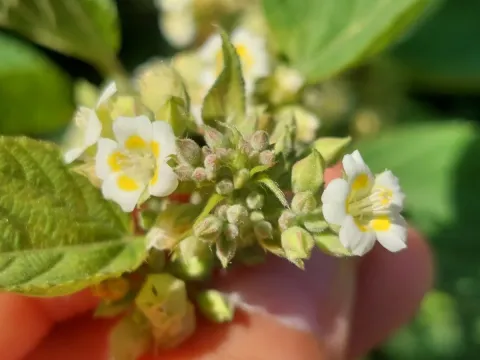
Melochia mollis
Melochia mollis
Melochia mollis is a perennial shrub belonging to the Malvaceae family, native to tropical regions of the Americas. This plant thrives in warm environments, typically found in open fields and areas with high solar exposure.
What the section contains
Melochia mollis
The climate requirements for this culture are strictly tropical, necessitating high temperatures throughout the year. It does not possess any frost tolerance, and cold snaps can be fatal to the plant, limiting its geographical distribution.
Regarding soil preferences, the plant grows best in well-drained, fertile sandy or loamy soils. It requires a substrate that allows for deep root penetration while maintaining sufficient moisture levels without causing waterlogging.
Agricultural practices involve maintaining consistent soil moisture, especially during the peak growth phase. While the plant shows moderate drought resistance once established, irrigation is crucial for maximizing biomass production in agricultural settings.
The economic use of Melochia mollis is primarily focused on its fiber content and its utility as a localized forage crop. Research also continues into its role in ecosystem restoration and as a green manure in specific tropical regions.
The primary threats to Melochia mollis are root rot and fungal infections, which are common when soil drainage is poor. Excessive water accumulation in the rhizosphere facilitates the growth of damaging pathogens.
Pests such as aphids and spider mites are frequent invaders of the foliage. These pests can cause significant leaf damage, reducing the plant's photosynthetic capacity and overall vigor.
Managing these threats requires strict adherence to field hygiene, including the removal of dead plant material and controlling weeds that might host pests. Proper spacing is essential for good airflow, reducing humidity-related diseases.
Biological controls are often preferred to manage pest populations, as they minimize the impact on the local environment and protect the quality of the harvested material.
Regular monitoring of the canopy and soil conditions allows farmers to intervene early, preventing small outbreaks from becoming major field-wide issues that could jeopardize the harvest.