
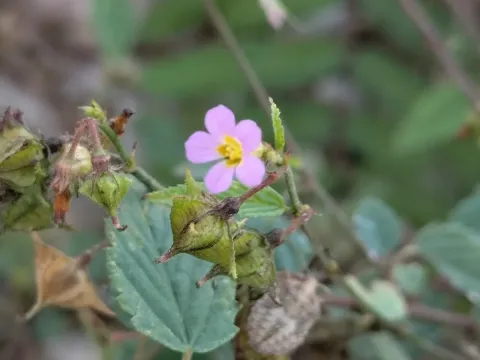
Melochia pyramidata
Melochia pyramidata
Melochia pyramidata is a herbaceous perennial plant belonging to the Malvaceae family. Originating from tropical regions, it is well-adapted to warm climates where it can exhibit continuous growth if environmental conditions are favorable.
What the section contains
Melochia pyramidata
Sowing is typically conducted when soil temperatures rise, as the seeds require sufficient heat to achieve optimal germination rates. Early spring or the onset of the rainy season provides the best timing for crop establishment.
The selection of a suitable planting site is crucial, favoring light, well-drained soils that allow the root system to develop without the risk of waterlogging, which the plant does not tolerate well.
Planting density is adjusted according to the intended use, such as biomass production or seed cultivation. A well-calculated spacing ensures that the plants have adequate access to light and nutrients.
High-quality, viable seeds should be used for sowing. Proper seed storage in cool, dry conditions maintains their germination potential for subsequent planting seasons.
As a tropical species, the plant is highly sensitive to frost and freezing temperatures. It thrives in environments with consistent warmth, typically between 22 and 30 degrees Celsius, throughout its growth cycle.
Melochia pyramidata exhibits moderate tolerance to drought, though regular moisture availability is essential for achieving maximum biomass production and ensuring high forage quality.
The plant performs best in moderately fertile soil. In intensive agricultural settings, the application of balanced fertilizers can significantly promote vegetative growth and overall plant vigor.
Sunlight exposure is a critical requirement, as shaded areas can lead to etiolated growth and reduced secondary metabolite production, which are often valued in such species.
Regular maintenance, including weed control during the establishment phase, is necessary to prevent competition and ensure that the young seedlings develop without hindrance.
The primary agricultural interest in Melochia pyramidata lies in its potential as a source of green fodder or biomass. Its rapid regeneration after cutting makes it a viable option for multiple harvests within a single season.
Yield productivity is directly influenced by the frequency of harvest and the nutritional status of the soil. Optimal management practices can result in substantial returns of vegetative mass.
The forage quality is highest before the flowering stage. Therefore, managing the timing of the harvest is essential for producers who prioritize high-protein fodder for livestock.
Beyond its forage potential, the plant is subject to ongoing research regarding its biochemical properties, which could lead to secondary uses in local industries or traditional medicine applications.
Sustainable harvesting techniques that protect the crown and root structure are vital to ensure the longevity of the plant stand and ensure high productivity in future harvests.
Fungal diseases are a significant threat, particularly in regions with high humidity. Ensuring proper air circulation within the canopy through adequate spacing is a key preventative measure.
Sucking insects, such as aphids and whiteflies, are common pests that feed on young tissues. They not only cause direct physical damage but can also act as vectors for various viral diseases.
Effective pest control involves a combination of scouting, biological controls, and the judicious use of systemic insecticides to manage populations before they cause economic losses.
Root-knot nematodes can occasionally pose a risk, especially in soil where the crop is monocultured. Rotating crops is a recommended practice to maintain soil health and suppress pathogen buildup.
Routine monitoring of the fields allows for early detection of issues, enabling localized treatments that reduce the need for large-scale chemical applications.
Harvesting for biomass should be timed precisely before the plant transitions into the reproductive phase. This ensures that the vegetative parts retain their maximum nutritional density.
Mechanical harvesting using forage cutters is the most efficient method for large fields. Equipment should be set to an appropriate height to avoid damage to the base of the stems.
For seed production, the harvest is performed when the capsules reach full maturity but before they begin to dehisce. Rapid harvesting prevents significant yield losses due to seed shattering.
Post-harvest processing involves drying the collected material efficiently to prevent spoilage and mold growth, which is critical if the material is intended for storage or trade.
Cleaning and calibrating the harvested seeds are essential final steps to ensure high uniformity and purity for the following agricultural cycle.