
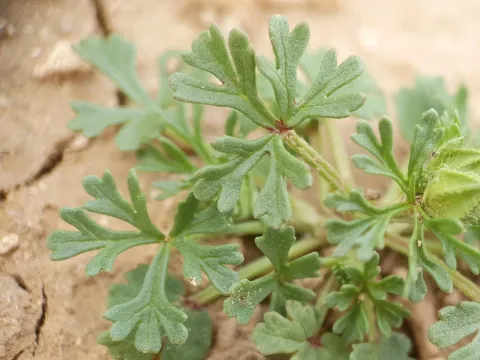
Egyptian mallow
Malva aegyptia
Egyptian mallow (Malva aegyptia) is an annual herbaceous plant belonging to the Malvaceae family. This species is native to the Mediterranean, North Africa, and the Middle East, having adapted to arid and semi-arid environmental conditions over time.
What the section contains
Egyptian mallow
The seeds of Egyptian mallow exhibit a high germination potential under optimal soil temperatures. The best time for sowing in its natural range is typically autumn or early spring, allowing the plant to complete its lifecycle before extreme summer heat.
Sowing technology involves shallow planting at a depth of 1–2 centimeters. It is crucial to ensure adequate contact between the seed and moist substrate to initiate the germination process successfully.
Seeding rates vary depending on the intended use; higher densities are used for biomass production, while lower densities are preferred for seed multiplication. Inter-row cultivation is essential to maintain weed control during the early stages of development.
Seedlings develop rapidly when temperatures remain stable between 15–20 degrees Celsius. The plant develops a taproot system, which enables efficient extraction of soil moisture during the initial growth phases.
Egyptian mallow thrives in well-drained, sandy loam or light loamy soils with a neutral to slightly alkaline pH. Waterlogging must be strictly avoided, as it significantly increases the risk of root rot and overall plant decline.
The plant is highly photophilous and drought-tolerant, a trait inherited from its origins in semi-desert habitats. Consistent exposure to direct sunlight is necessary to maximize biomass accumulation and ensure healthy seed formation.
Moderate soil moisture is required during the vegetative phase and the onset of stem elongation. While the plant can tolerate water stress during the flowering stage, controlled irrigation will significantly boost the final yield.
The species is not demanding regarding soil fertility but shows a positive response to nitrogen and phosphorus fertilizers. Excessive nitrogen should be avoided to prevent over-development of foliage at the expense of floral production.
Due to its low cold tolerance, Egyptian mallow is best suited for regions with mild climates. The growing season should ideally be free of late-spring frosts to prevent damage to sensitive young tissues.
Primary phytopathogens for Egyptian mallow include fungal diseases such as powdery mildew, which often appears in conditions of high humidity and poor air circulation within the plant canopy.
Root rots can develop due to improper soil moisture management or non-observance of crop rotation practices. Prevention focuses on ensuring adequate field drainage and diversifying the planting schedule.
The most significant pests are leaf-eating insects, including various leaf beetles and aphid species. Large-scale infestations can stunt growth and reduce the overall quality of the harvested biomass or seeds.
Integrated pest management strategies, including the use of biological control agents and regular monitoring, are recommended to maintain healthy crops without relying on excessive chemical inputs.
Consistent weeding is vital, as wild weeds often act as hosts for pests and diseases that can easily jump to the cultivated Egyptian mallow plots, compromising the entire crop's health.