
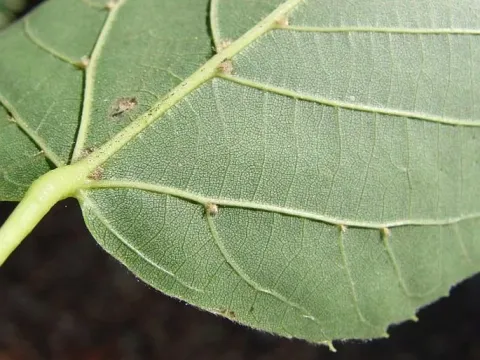
Drooping lime
Tilia flaccida
Propagation of Tilia flaccida in nurseries is most often carried out by seeds or vegetatively through grafting onto Tilia cordata rootstock. Sowing is conducted in autumn before winter, as seeds require a long stratification period to germinate.
What the section contains
Drooping lime
Seedlings appear in spring, and during the first year of life, they require shading and regular watering. The soil in the rows must be kept loose and free of weeds to ensure proper development of the root system.
Vegetative propagation uses cuttings planted in greenhouses equipped with misting systems. This approach allows for the production of uniform planting material while maintaining the specific traits of the species.
Young seedlings are transferred to prepared plots at the age of 2–3 years for permanent growth. It is important to maintain sufficient spacing between plants, taking into account their future crown size and light requirements.
Planting holes should be enriched with organic fertilizers and include a drainage layer. After planting, the base of the trunk should be mulched to retain moisture and suppress weed growth.
Tilia flaccida prefers fertile, fresh loamy soils with good aeration. The crop does not tolerate waterlogging or excessive soil salinity, so sites with a high groundwater table are unsuitable.
The plant is moderately shade-tolerant, although open, well-lit areas are preferred for forming a dense and beautiful crown. The species is characterized by good winter hardiness, adapting well to temperate climate conditions.
During the active growing season, the crop requires moderate moisture, especially in dry months. Mature trees show resilience to brief drought periods due to their deep root systems.
The species is neutral regarding wind exposure; however, young specimens may require support during the first years after planting. Optimal soil pH is slightly acidic or neutral.
Agrotechnics include regular sanitary pruning to remove dry or damaged branches. In urban environments, the species is valued for its high tolerance to air pollution and dust.
The economic importance of Tilia flaccida is defined not only by its ornamental value but also by its status as a valuable honey plant. The flowering period provides bees with abundant nectar, significantly increasing apiary productivity.
Linden honey is considered a premium product due to its medicinal properties and distinct aroma. The productivity of one mature tree in a favorable season can be measured in kilograms of pure honey.
The wood of this species is used in joinery and the production of craft items. It is characterized by softness, ease of processing, and a lack of tendency to crack during the drying process.
Linden flowers are widely used in the pharmaceutical industry and traditional medicine as raw material for diaphoretic and anti-inflammatory remedies.
Large-scale linden plantings contribute to microclimate improvement on agricultural lands and the creation of protective shelterbelts. This helps reduce wind erosion and increases the yield of surrounding crops.
Among pests, the greatest danger to the crop is posed by leaf-eating insects, such as the linden moth and various aphid species. They can significantly reduce the ornamental value of the crown and weaken the tree.
Diseases often manifest as leaf spots caused by fungal pathogens. Fungicide treatments in early spring, before bud break, are used to control these outbreaks.
Powdery mildew can affect linden trees during periods of high humidity and poor crown ventilation. Timely sanitary pruning and thinning help minimize the risk of infection spread.
Young seedlings can be damaged by rodents, so trunks should be protected with special netting or wraps during winter. Bark damage opens pathways for bacteria to enter the tree.
Comprehensive protection includes monitoring tree health and following established agricultural practices. A healthy, well-nourished tree possesses natural immunity against most threats.