
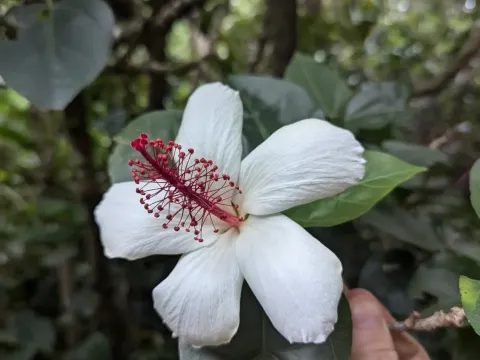
Hibiscus arnottianus
Hibiscus arnottianus
Hibiscus arnottianus is a species of flowering shrub or small tree belonging to the Malvaceae family. It is native to the wet forests of the Hawaiian Islands, where it thrives in high humidity and consistent tropical temperatures.
What the section contains
Hibiscus arnottianus
Botanically, this species is noted for its pristine white or sometimes pale pink flowers, which are distinguished by their sweet fragrance, a relatively rare trait among hibiscuses. The plant possesses dark green, ovate leaves that remain vibrant throughout the year.
For successful cultivation, the plant requires well-drained, nutrient-rich soil. It is highly sensitive to cold and must be kept in frost-free environments. Providing a sheltered position away from strong, drying winds is essential for maintaining the integrity of its petals.
A consistent watering regime is crucial; the soil should be kept moist but never waterlogged. During the growing season, applying a balanced fertilizer will support robust development and encourage frequent flowering, which can occur throughout the year in optimal conditions.
The primary utility of this plant is ornamental, serving as a focal point in tropical landscapes and botanical gardens. It is also of significant importance in botanical research and hybridization programs, contributing unique traits such as disease resistance and fragrance to new cultivars.
Common pests include aphids, scale insects, and spider mites, which can cause significant damage to young shoots and foliage. Integrated pest management, including horticultural soaps or neem oil, is typically recommended to keep populations under control.
Root rot, often caused by poor drainage or overwatering, is the most critical threat to the plant's health. Additionally, fungal leaf spots may appear if the plant is grown in areas with stagnant air or excessive overhead moisture during cooler periods.