
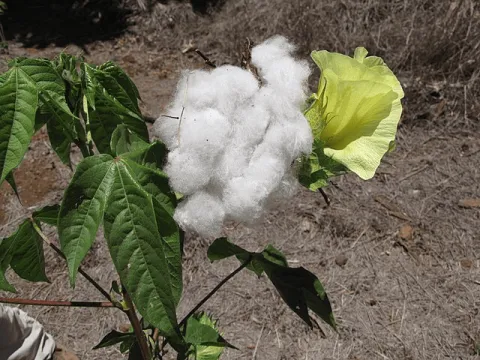
Cape Verde Cotton
Gossypium capitis-viridis
Cape Verde cotton is a heat-loving crop that requires consistent warmth throughout its growth cycle. Sowing usually begins when soil temperatures reach a stable range of 18°C to 20°C, typically coinciding with the onset of the local rainy season.
What the section contains
Cape Verde Cotton
Land preparation involves deep plowing to improve soil aeration and incorporation of organic matter to enhance nutrient availability. Seeds are planted in rows, which is essential for maximizing sunlight exposure and facilitating mechanical field maintenance.
The planting depth typically ranges from 3 to 5 cm. This ensures that the seeds have enough soil moisture to germinate while still being close enough to the surface to emerge vigorously in the tropical climate of the archipelago.
Spacing between plants is crucial to prevent competition for resources. Proper plant density helps maintain airflow through the canopy, which is a key factor in reducing the incidence of moisture-related diseases in cotton plantations.
Success in sowing depends on precise timing. Planting too early risks cold-related damage, while planting too late can force the maturation stage into a drier, less favorable period, directly affecting the final fiber quality.
This species thrives in high temperatures, with an optimal range of 25°C to 30°C for vegetative growth. It is highly sensitive to cold, and temperatures dropping below 15°C can cause significant physiological stress and growth arrest.
The crop requires well-drained, fertile soils with a neutral to slightly alkaline pH. Soils prone to waterlogging must be avoided, as stagnant water is detrimental to the development of the taproot system and encourages root rot.
Water availability is critical during the flowering and boll-filling stages. Although the plant shows some tolerance to drought, consistent soil moisture during these phases is vital for high yields and uniform fiber development.
Light intensity is another major requirement. Being a tropical crop, it needs full sun exposure to maintain high photosynthetic rates. Any shading of the plants will result in reduced boll count and stunted vegetative development.
Balanced fertilization is necessary to support plant growth. A proper mix of nitrogen, phosphorus, and potassium should be applied based on local soil tests to avoid excessive vegetative growth at the expense of boll production.
Sucking insects, including aphids and spider mites, are the most prevalent pests. They sap nutrients from the leaves, causing wilting and deformation, and can significantly decrease the plant's overall vigor during the growing season.
The cotton bollworm poses a severe threat by directly attacking the fruiting parts of the plant. If left uncontrolled, the larvae can tunnel into the developing bolls, destroying both the fiber and the seeds inside.
Fungal diseases like Verticillium wilt are common in humid environments or where crop rotation is neglected. These infections obstruct the plant's water-conducting vessels, leading to rapid yellowing and death.
Bacterial blight can affect leaves and stems, especially following wind damage. Maintaining field hygiene and removing infected plant debris after harvest are essential practices to limit the spread of these pathogens.
- Implement strict crop rotation schedules to break pest lifecycles.
- Monitor pest populations using traps to time insecticide applications accurately.
- Select local, adapted varieties that exhibit natural resistance to common regional diseases.