
Callirhoe
Callirhoe
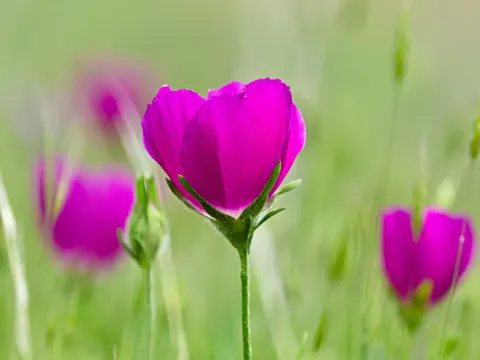
Callirhoe, commonly known as poppy mallow, is a genus of herbaceous plants belonging to the Malvaceae family. Native to North America, these plants are highly valued for their resilience and striking flowers. The genus includes both annual and perennial species that have adapted to diverse environments ranging from prairies to dry, open fields.
What the section contains
Callirhoe
The primary requirement for successful growth is full sun exposure. Callirhoe thrives in bright light and requires a minimum of six to eight hours of direct sunlight daily to produce high-quality blooms. Insufficient light results in weak, leggy stems and significantly reduces the flowering period, which is essential for the plant's ornamental value.
Soil requirements for Callirhoe focus heavily on drainage. The plants are remarkably tolerant of poor, rocky, or sandy soils, but they strictly require well-draining conditions to prevent root rot. They perform poorly in heavy, clay-based soils that hold excessive moisture, especially during the dormant winter months when waterlogged conditions are lethal.
Regarding climate, Callirhoe is well-adapted to hot and dry summer conditions. Once established, the deep taproot system allows the plant to access moisture from deeper soil layers, making it an excellent choice for drought-tolerant landscapes. It does not require intensive irrigation, which is an advantage in regions with limited water resources.
In terms of agricultural and horticultural use, Callirhoe is primarily utilized as a decorative groundcover. Its sprawling stems and vibrant blossoms make it ideal for xeriscaping, erosion control on sunny slopes, and as a component of native plant gardens. It serves no significant role in commercial food or forage production.
While generally robust, Callirhoe can be susceptible to powdery mildew when planted in areas with poor air circulation or high humidity. Maintaining proper plant spacing and avoiding overhead watering can significantly reduce the risk of this fungal disease throughout the growing season.
Insect pests are generally not a major concern for this genus. However, spider mites may occasionally infest the foliage during prolonged hot and dry spells. Monitoring the plant for stippling on the leaves is recommended, and the application of horticultural oils or insecticidal soap is usually sufficient for control.