
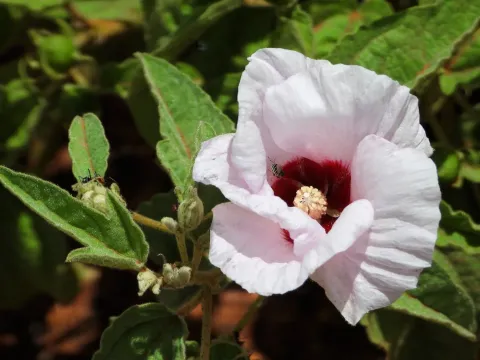
Bick's cotton
Gossypium bickii
Bick's cotton (Gossypium bickii) is a wild species of flowering plant belonging to the Malvaceae family. It is endemic to the arid and semi-arid regions of Australia, specifically found in Queensland and the Northern Territory.
What the section contains
Bick's cotton
This shrub is highly specialized for survival in harsh, low-rainfall environments. It exhibits significant xerophytic adaptations, such as deep taproots and pubescent foliage to reduce transpiration.
The plant requires full sun exposure and high ambient temperatures to thrive. It is extremely sensitive to waterlogging, which can cause rapid decay of the root system and plant death.
Soil requirements for Gossypium bickii include excellent drainage and coarse texture. It does not tolerate high salinity levels, which are sometimes present in its natural arid habitats, so site selection is crucial.
Agronomic management of this species is largely experimental. Practitioners focus on maintaining a delicate balance of light irrigation, ensuring that the soil remains dry enough to prevent fungal proliferation.
The plant faces several pest threats, primarily from lepidopteran larvae that target the developing squares and flower buds, potentially destroying the reproductive cycle.
Fungal pathogens such as Fusarium oxysporum represent a significant risk, particularly if the cultivation environment becomes too humid or poorly aerated.
Sucking insects, including aphids and whiteflies, are frequent pests that can stress the plant and act as vectors for various viral diseases affecting the Malvaceae family.
Root-knot nematodes can severely impact plant vigor and biomass production in susceptible soil types, necessitating soil monitoring before planting.
Effective management requires a proactive approach to integrated pest management, given the lack of specialized pesticides approved for this non-commercial wild species.