
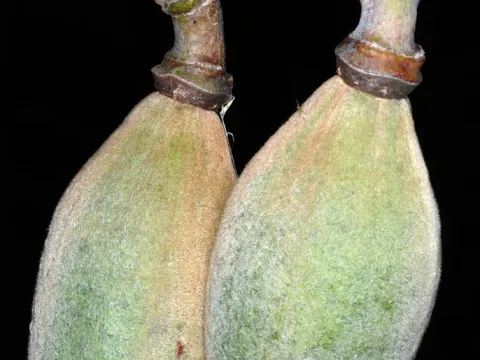
Bombax ceiba
Bombax ceiba
Propagation of Bombax ceiba is primarily achieved through seeds, which should be sown fresh to ensure high germination rates. Seeds lose viability quickly if stored improperly.
What the section contains
Bombax ceiba
Pre-sowing treatment involves soaking seeds in warm water for 12 to 24 hours. This practice helps break dormancy and promotes uniform seedling emergence in nursery beds.
Seedlings are typically raised in containers until they reach a suitable size for field transplanting. A light, well-draining potting medium is essential for root health.
Field planting is ideally scheduled at the onset of the rainy season to allow young trees to establish their root systems before the onset of the dry season.
Spacing guidelines vary based on the intended harvest; high-density plantings are used for timber production, while wider spacing is preferred for kapok fiber collection.
Bombax ceiba is a tropical deciduous tree belonging to the Malvaceae family. It is native to Asia and thrives in regions with consistently high temperatures.
The tree prefers deep, fertile, and well-draining alluvial soils. It is highly sensitive to waterlogging, which can cause rapid decay of the taproot system.
Full sun exposure is required for vigorous growth. The tree is intolerant of shade and will struggle to produce fruit or reach its full potential in shaded areas.
During the early establishment phase, irrigation may be necessary in prolonged dry spells to prevent drought stress and ensure consistent vertical growth.
Wind protection is advised for young specimens, as the rapid growth of juvenile branches can make them prone to breakage in areas with strong, gusty winds.
The primary commercial product is kapok, a lightweight, buoyant, and moisture-resistant fiber found inside the fruit pods, used in insulation and upholstery.
The timber of Bombax ceiba is soft and lightweight, making it an excellent material for the manufacturing of plywood, matchsticks, and various light industrial crates.
Economic returns are derived from both the fiber and the timber. Mature trees provide a consistent annual yield of pods, which can be harvested without felling the tree.
Floral nectar makes the tree a valuable asset for beekeepers, contributing to the biodiversity and productivity of the surrounding agricultural landscape.
Sustainable forest management ensures that timber harvesting is balanced with replanting, maintaining the long-term productivity of the plantation sites.
Leaf-eating caterpillars and aphids are common pests that can significantly reduce the photosynthetic capacity of the trees if left unmanaged.
Fungal pathogens such as Fusarium species can cause root and stem rots, especially in plantations where soil drainage is inadequate or humidity is excessive.
Wood-boring insects represent a major threat to mature timber, as they tunnel through the trunk, compromising the structural integrity and quality of the wood.
Integrated pest management (IPM) strategies, including biological controls and regular field scouting, are recommended to minimize the reliance on chemical pesticides.
Maintaining clean orchard conditions, such as removing fallen debris and infected plant parts, is crucial for preventing the spread of diseases within the nursery.
Harvesting of the fruit pods is typically performed manually or with specialized pole tools just before the pods split open naturally in the field.
Post-harvest processing involves sun-drying the pods until they open fully, allowing for the easy extraction of the silky kapok fibers and internal seeds.
The extracted fiber is cleaned of debris and compressed into bales for transport. Proper storage in dry conditions is essential to maintain fiber quality and prevent mold.
Timber harvesting is conducted through selective logging practices, ensuring that the best specimens are allowed to reach full maturity before removal.
Efficiency in harvesting is critical, as the fibers are easily dispersed by the wind once the pods open, which could lead to significant loss of the crop.