
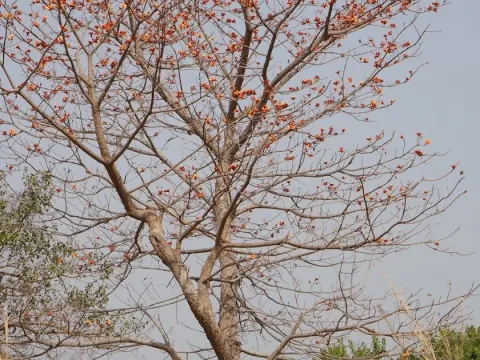
Bombax buonopozense
Bombax buonopozense
Propagation of this culture in natural and managed environments is primarily achieved through seeds. Sowing should be carried out immediately after collection, as the seeds have a limited period of viability and lose their germination capacity quickly when dried.
What the section contains
Bombax buonopozense
In nurseries, seeds are sown into a nutrient-rich substrate with excellent drainage at a depth of 1–2 centimeters. Optimal temperatures for germination should be maintained between 25 and 30 degrees Celsius with consistently high air humidity.
To accelerate the germination process, seeds are often pre-soaked in warm water for 12–24 hours. This practice softens the tough seed coat and triggers the physiological growth processes of the embryo.
Young seedlings require shading during the first months of their growth to prevent damage from intense direct sunlight. As the plants develop, they are gradually acclimatized to higher light levels before being transplanted to their final location.
The transplantation of seedlings into the field is best performed at the onset of the rainy season, ensuring the root system has sufficient moisture for successful establishment and adaptation to soil conditions.
Bombax buonopozense is a member of the Malvaceae family, native to the tropical regions of Western and Central Africa. The tree thrives in humid forest zones and exhibits a high degree of adaptability to the transitions between wet and dry seasons.
The culture is highly demanding of light: for full canopy development and prolific flowering, the tree requires direct sunlight. Under conditions of heavy shading, growth rates decline significantly, and the tree's ornamental value diminishes.
Optimal soils for cultivating this species are deep, fertile loams with a neutral or slightly acidic pH value. Proper drainage is a critical factor, as waterlogged conditions in the root zone can be fatal to the plant.
The plant demonstrates significant resilience to short periods of drought; however, for maximum productivity, regular irrigation during the dry season is necessary. High relative humidity remains a vital prerequisite for maintaining healthy foliage.
In its natural habitat, the tree can reach substantial heights. Consequently, in commercial plantations, it is essential to maintain proper spacing between individual trees to prevent competition for light and nutrients.
The industrial and local utilization of Bombax buonopozense involves harvesting various parts of the plant for pharmaceutical, construction, and textile purposes. The timing of harvest depends on the specific climatic zone of cultivation.
The harvest of fruits containing the fluffy fiber, similar to kapok, is performed at the stage of full maturity, when the capsules begin to crack open naturally. It is essential to collect the material before the fibers are dispersed by the wind.
Bark and leaves are harvested as needed throughout the growing season. When collecting bark, it is important to utilize sustainable methods to avoid permanent damage to the tree and to ensure its long-term regeneration.
Processing of the fiber involves removing the seeds followed by drying the fluff in the sun. The resulting material is utilized as an eco-friendly stuffing for furniture, bedding, or as a thermal insulation material.
The timber of the tree is characterized by its light weight and soft texture, making it suitable for local woodworking, the production of light packaging crates, and various crafts, though it requires antifungal treatment for longevity.